
Guide
When a Mansfield, OH Garage Door Spring Fails in Cold Weather
Mansfield, OH homes built 1938-1983 face brittle torsion springs in severe cold winters. Here's what breaks, what it costs, and when to call a pro instead.
Local detail
What the Weather Here Does to It
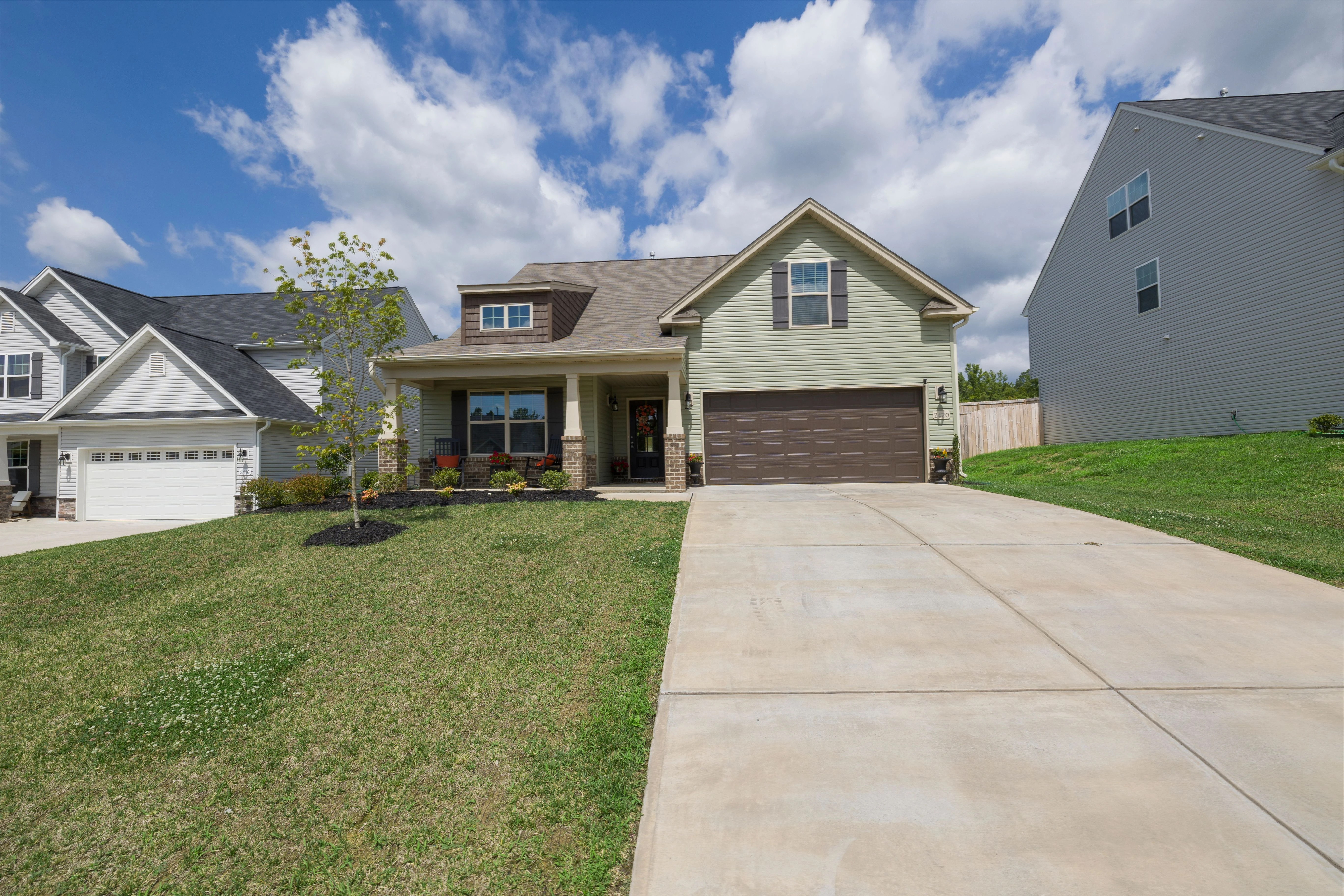
Most of the housing stock in this service area went up between 1938 and 1983, with the median sitting around 1957. That's a lot of original torsion springs still hanging on their original shafts, and this area sits in a cold-severe climate band, which means real freeze-thaw swings every winter, not just a couple of cold nights. Steel doesn't like that.
A torsion spring that's wound tight and then sits in an unheated garage through a hard freeze loses some of its give. It gets brittle. That's when a spring goes in cold weather - not during a heat wave, not in a mild October, but on the coldest morning of the year when someone hits the opener button on the way to work and the spring just lets go.
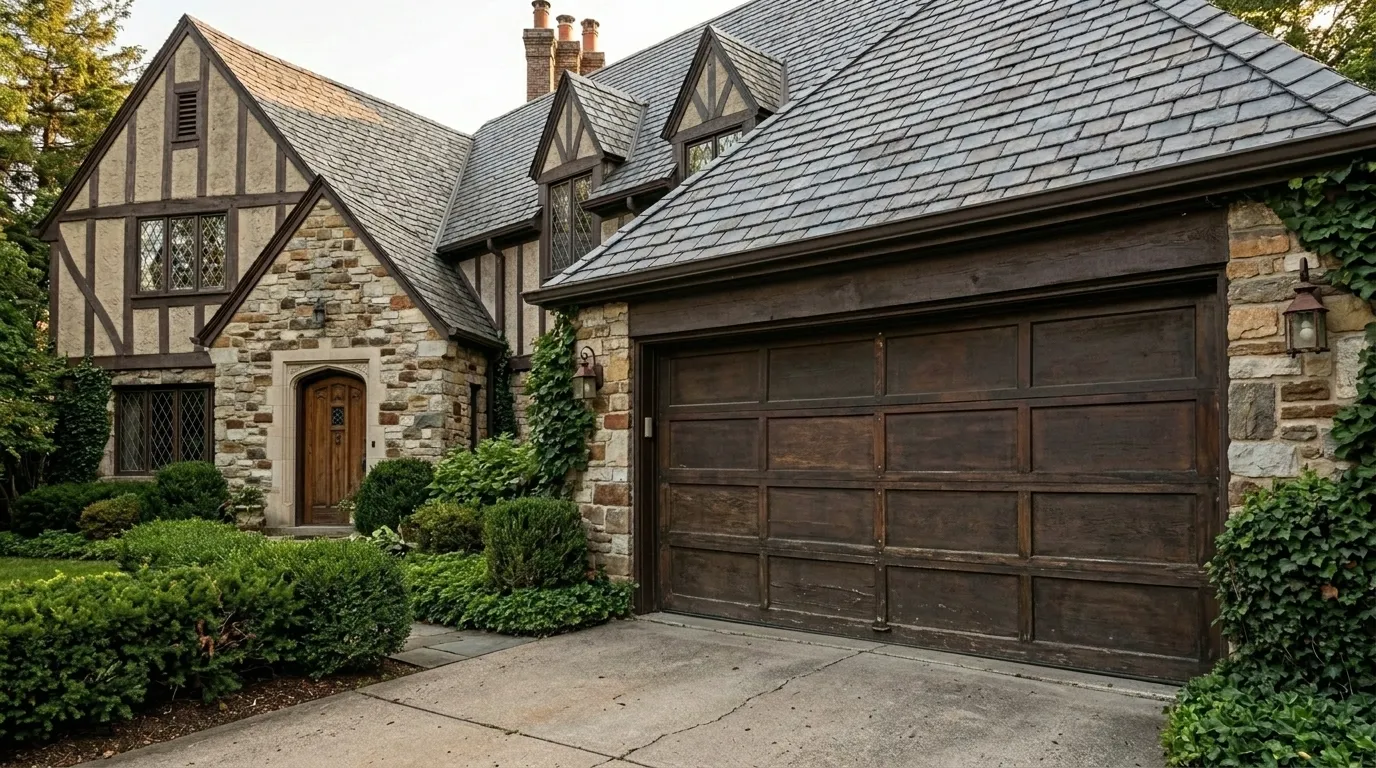
On a 1950s or 60s door with the original hardware, there's often rust in the coil already from decades of temperature cycling, which makes the break happen sooner and more violently than it would on newer, galvanized coil stock. If your door is original to a house built in that era, treat cold mornings as the time it's most likely to fail, not the time you can put it off.

The area
The Cost of This Job
We're not going to hand you a national average number that has nothing to do with your actual door. What we can tell you is what drives the cost up on houses in this area specifically: doors built between 1938 and 1983 sometimes carry non-standard spring sizes or side-mount torsion setups that newer stock doors don't use, and those parts aren't sitting on a shelf the way a common size is. That means a repair on an original door can take longer to source and cost more than swapping a spring on a door built in the last twenty years.
With a median household income of $58,607 across the area, we know most owners are weighing a repair against a full replacement carefully, not treating it as a small decision. Our honest limitation here: if your door is old enough that the track, hinges, and panels are all original alongside the spring, a spring-only repair sometimes isn't the smart move, and we'll tell you that on the call rather than sell you a patch job that fails again in a year.
What we find
When It Stops Being a DIY Job
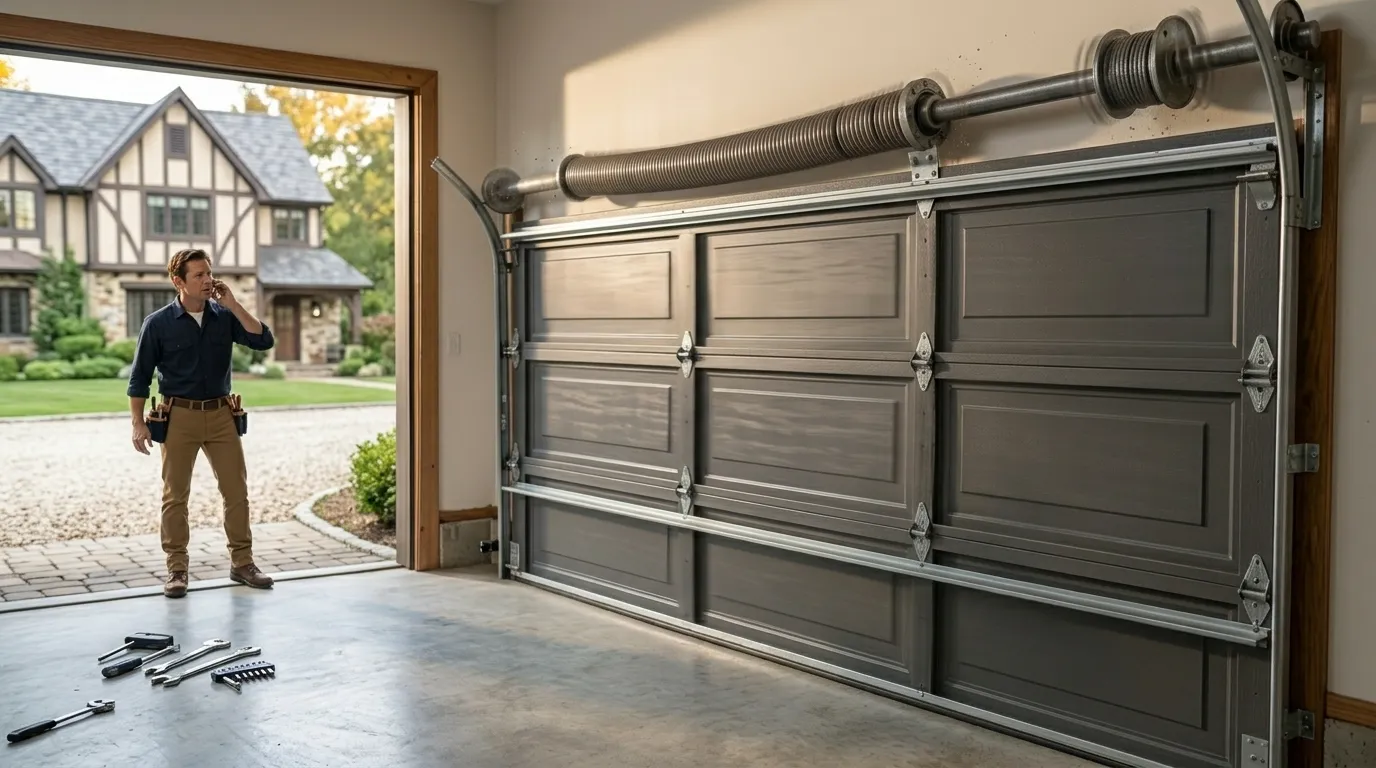
A torsion spring under tension is dangerous on any door, but the risk goes up on the pre-1960 stock common in this area, where the winding cone or the shaft itself may be original and weakened by decades of cold-weather cycling. If the break happens in freezing temperatures, the metal around the break is more likely to be brittle rather than clean, which means sharper edges and a less predictable release of tension. This is not a job to try with a couple of winding bars in a driveway at 20 degrees.
If you've got a broken spring on an older door, a door that won't move at all, or cables that have come off the drum, stop there. Call it in. We're also not going to pretend every job is simple - if the opener, track, and spring are all original to a house from the 1938-1983 build era, there may be more going on under the panel than a spring swap fixes, and that's worth a look in person before anyone touches a wrench.
How we work
What Is Going On
The mechanism is straightforward once you see it: steel contracts as it cools, and a torsion spring that's already under load from being wound tight loses flexibility as the temperature drops. In a cold-severe climate, that swing happens fast and often, not once a winter but repeatedly, and each cycle adds a little metal fatigue. On a door built in the median year of 1957, that spring has had a lot of winters to accumulate that fatigue before it finally lets go. Across the roughly 27,951 households in this area, with about 13,944 of those owner-occupied houses, a large share still carry hardware from that same build era, which is why cold-morning spring failures aren't rare here - they're close to routine.
This holds for houses right in Mansfield and for the same pre-1960 stock out toward Ontario, four miles off, and Lexington, six miles out, where the housing ages out the same way. It's not bad luck. It's an old spring meeting a cold morning, on schedule.
Questions
Common questions
Why did my spring break on the coldest morning of the year?
Cold makes steel more brittle, and a torsion spring is already under heavy load even when the door is closed. On an older door - and a lot of houses here were built between 1938 and 1983 - the spring has had decades of cold cycles to fatigue. The coldest mornings are when that fatigue finally gives out, which is why breaks cluster in hard freezes rather than mild weather.
Is it worth repairing an old torsion spring or should I replace more of the door?
Depends what else is original. If the spring is the only thing that's failed and the track and hinges are sound, a spring swap makes sense. If your door dates to the same era as the spring and other parts are showing wear, replacing more at once can save you a second call later. We'll tell you which situation you're in when we look at it.
Can I wait until spring to fix a broken torsion spring?
You can, but the door won't lift safely without the spring's counterbalance, and you'll be working the opener or lifting it by hand in cold weather in the meantime. Given the cold-severe winters here, a door stuck shut or forced open by hand is more of a liability than most people expect. It's better handled when it breaks.
Ready when you are
Need a garage door sorted in Mansfield?
Mansfield Garage Door Pros repairs and installs garage doors, springs and openers in Mansfield, OH and the surrounding area.