
Guide
When to Repair vs Replace an Older Mansfield Garage Door
Mansfield's housing runs 1938 to 1983 and the winters are hard on old hardware. Here's how to tell if your garage door is worth repairing or past it.
Local detail
What the Weather Here Does to It
Mansfield sits in a climate band we'd call cold-severe, and that matters more to a garage door than most owners think. Cold doesn't just make things stiff - it changes the physics of the spring. A torsion spring that's rated for a certain number of cycles in a mild climate gets fewer usable cycles here, because steel contracts in hard freezes and the coil takes more stress on every lift. That's why we see more mid-winter spring failures than mid-summer ones.
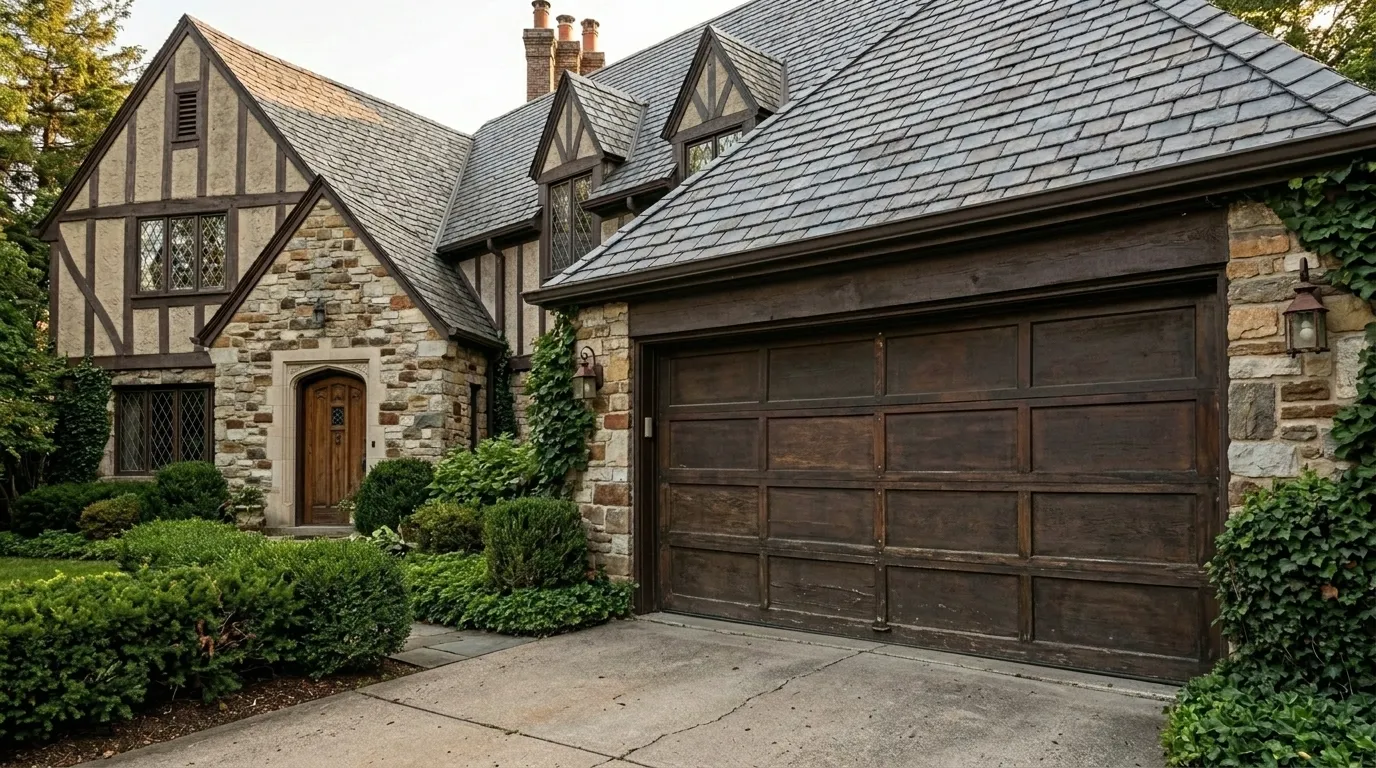
Older doors built when this area's housing stock went up - mostly 1938 to 1983, with the median sitting at 1957 - usually don't have the same weatherstripping or insulated panel construction that's standard now. A single-layer steel panel from that era loses heat fast and lets condensation collect on the inside face, which speeds up rust at the bottom panel and hinges. If your door is from that window, the cold isn't just an inconvenience, it's actively shortening the life of the hardware.
We're not going to tell you every old door needs to be replaced because of the weather. A lot of them just need the spring sized correctly for the door weight and a track alignment check before the first hard freeze. But if you're already seeing rust streaks or the door drops fast when the spring lets go, the cold is the reason it's happening now instead of in July.

The area
The Cost of This Job
We don't have pricing to quote you here, so we won't invent a number. What we can tell you is how to think about the decision. With a median household income of $58,607 across the area we serve, most of the calls we get are from people who want a straight answer before they spend money, not a sales pitch toward the newest door on the lot.
The real cost question with an older door usually isn't repair versus replace on price alone - it's parts. A door built in the 1950s or 1960s may use panel sections, hinges, or track hardware that isn't made anymore. If one panel is dented but the rest of the door is sound, tracking down a matching used or salvage panel can take longer and cost more in labor than just replacing the section with modern stock, even if the modern stock doesn't match perfectly. That's a real tradeoff, and it's worth having someone look at the door in person before you decide.
We'd rather tell you a repair isn't worth it than talk you into one that is. If the springs, rollers, and opener are all near the end of their life at the same time, patching one part while the rest fails within a year isn't doing you any favors.
What we find
When It Stops Being a DIY Job
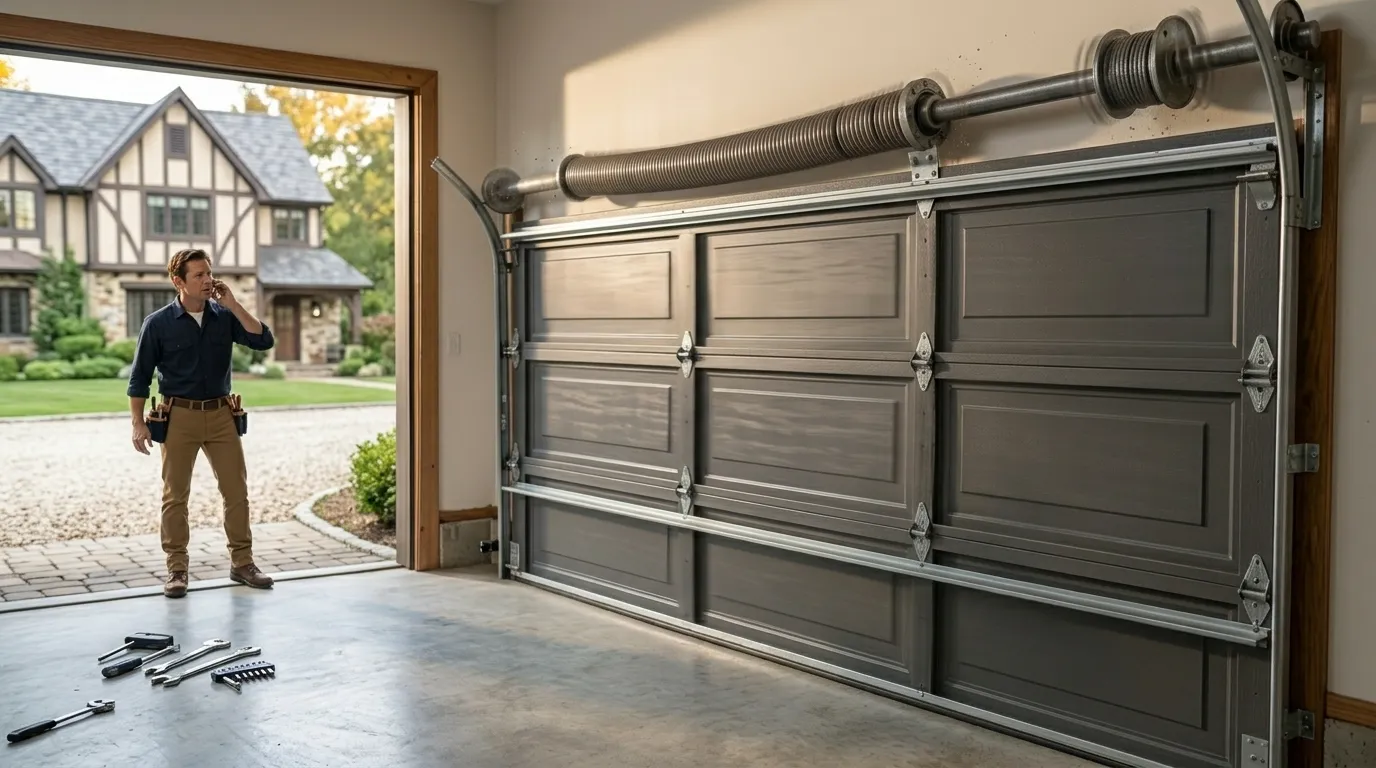
Torsion springs are the line we draw. They're under enough tension to cause a serious injury if they let go while you're working on them, and that risk doesn't go down because the door is old - if anything it goes up, since older spring mounts and center brackets have had decades to rust or loosen. If your door groans, sags on one side, or the spring itself has a visible gap in the coil, that's a call, not a Saturday project.
Cable work is the other one. On a lot of the pre-1960 stock still standing in this area, the cable drums and end bearings are original or close to it, and the cable itself can fray inside the drum groove where you can't see it until it snaps. Winding a new spring or feeding a new cable onto worn drums without the right bars and clamps is how people end up in the emergency room, not how they end up with a fixed door.
What you can reasonably do yourself: lubricate rollers and hinges, check and tighten loose hardware, clear the track of debris, and test the auto-reverse safety feature. Those jobs don't involve stored spring tension and they're worth doing on a regular basis, especially heading into the cold months.
How we work
What Is Going On
When we get called out to a door built during this area's main construction era - 1938 through 1983, median 1957 - the pattern repeats a lot: original torsion or extension springs that have outlived their rated cycles, rollers that were never upgraded from steel to nylon, and an opener that's a later addition bolted onto hardware it wasn't designed for. None of that means the door is junk. Steel doors from that period were often built heavier than what's sold today, and the panel steel itself frequently outlasts the moving parts around it.
The honest tell for whether a door's worth fixing is usually the track and the frame, not the panel. If the vertical tracks are straight, the frame isn't rotted or rusted through at the base, and the panel doesn't have a structural crack, most of what's wrong is serviceable - springs, cables, rollers, and hinges are all replaceable parts on a door that's otherwise sound. If the frame has shifted or the bottom panel has rusted out from years of snow melt sitting against it, you're better off putting the money into a new door instead of chasing repairs on a frame that's already failing.
We look at the door in person before we say which one it is. Over the phone, we can only tell you what's common, not what's true of your door.
Questions
Common questions
Is a garage door from the 1950s or 60s worth repairing?
Often, yes - if the frame and tracks are straight and the panel isn't rusted through. Steel doors from that era were built heavy, and the panel steel usually outlasts the springs, cables, and rollers around it. The parts that fail are almost always replaceable on their own.
Why do garage door springs break more in winter here?
Mansfield sits in a cold-severe climate band, and steel springs lose flexibility in hard freezes, taking more stress per cycle than they would in milder weather. A spring near the end of its rated life is more likely to snap on a cold January morning than in July.
Can I find replacement parts for an older garage door?
Sometimes. Common wear parts like springs, cables, rollers, and hinges are made to standard sizes and are usually available. Original panel sections from a specific 1950s-1970s model are the harder find, which is why a dented panel sometimes gets replaced with a modern match instead of a true original.
Should I replace the whole door or just fix what's broken?
Depends on what's failing. If it's springs, cables, or rollers on a door with a sound frame and straight tracks, repair usually makes sense. If the frame has shifted or the bottom panel has rusted out, you're paying to patch a door that's already failing structurally.
Ready when you are
Need a garage door sorted in Mansfield?
Mansfield Garage Door Pros repairs and installs garage doors, springs and openers in Mansfield, OH and the surrounding area.