
Guide
What a Service Call Actually Covers in Mansfield, Ohio
A breakdown of what actually happens on a garage door service call in Mansfield, Ohio, based on the age of local housing and the region's winters.
Local detail
What the Weather Here Does to It
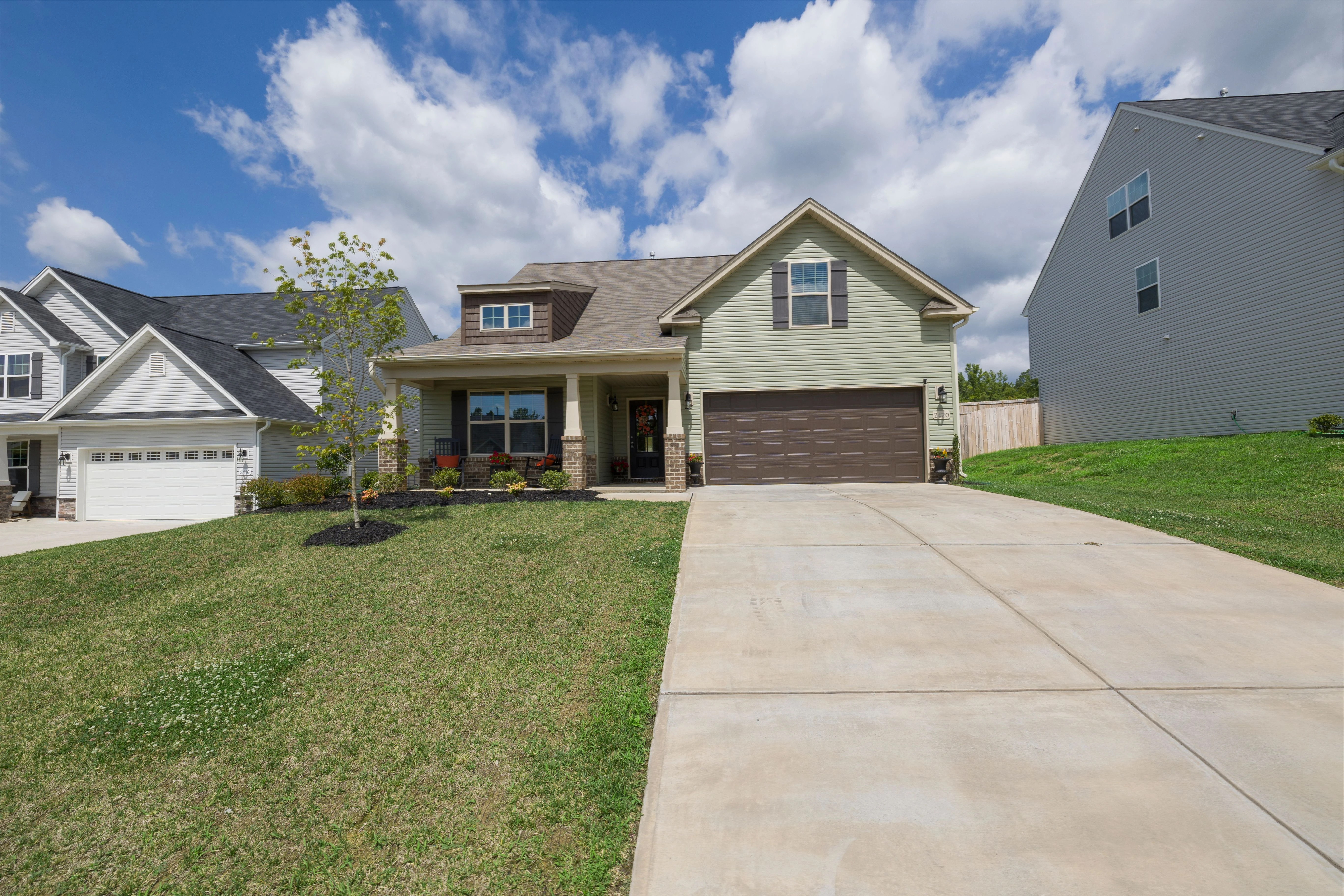
Mansfield sits in a cold-severe climate band, and that changes what breaks and when. Steel torsion springs lose tension faster in hard cold, and a spring that's been fine all summer can snap the first week temperatures drop hard. Most of the houses we get called to went up between 1938 and 1983, with the typical build year sitting around 1957, so the springs, cables, and rollers we're pulling off aren't factory-fresh to begin with - they've already done a couple decades of freeze-thaw cycling before we ever see them.
Cold also stiffens the grease in old rollers and hardens weatherstripping until it cracks instead of flexing, which is why a door that closed fine in October can bind or grind by January. On a service call, we're checking spring tension, looking at cable fraying near the drum, and feeling for roller drag - all things that a cold-severe climate accelerates on hardware this old. We're not diagnosing a brand-new door the same way we'd diagnose one that's outlasted three winters past its expected life.

The area
The Cost of This Job
I'm not going to put a number here that I can't back up - the honest answer is that cost depends on what's actually failing, and on a house built in the 1950s that's rarely just one thing. What drives the bill up isn't labor time so much as parts: original hardware from a pre-1960 build sometimes uses spring sizes or track widths that aren't sitting on a shelf anymore, so a repair can mean sourcing the right part instead of grabbing the standard one.
What I can tell you is what we price a call around: the diagnosis itself, the parts needed once we know what's wrong, and whether the fix is a repair or whether the door's age means replacement makes more financial sense. Across the area we serve, income runs middle-of-the-road, and most owners we talk to want a straight repair-or-replace answer, not a sales pitch toward the most expensive door in the showroom. If a $40 part fixes it, that's what goes on the invoice. If the opener or the door itself is past the point where parts are worth chasing, we'll say so before we start work, not after.
What we find
When It Stops Being a DIY Job
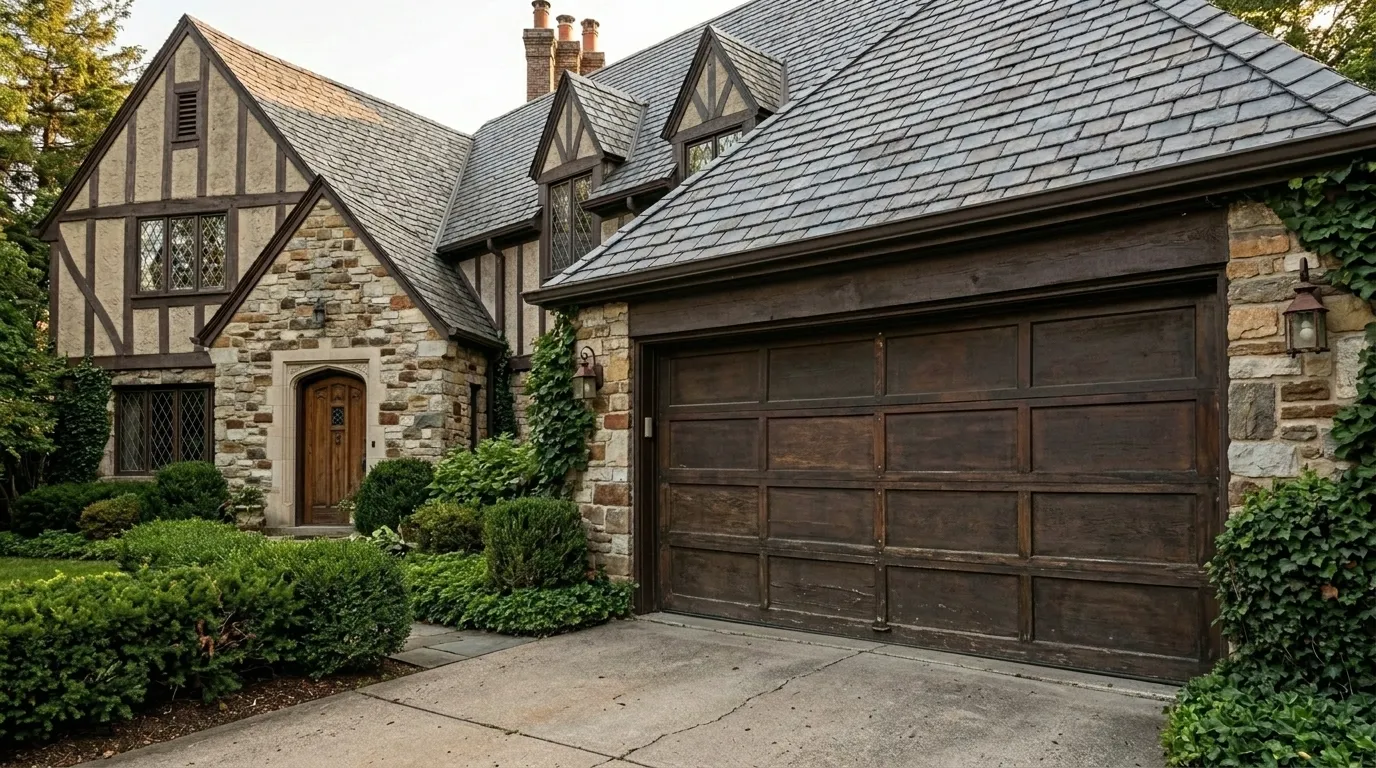
A torsion spring under tension can put someone in the hospital, and that's true whether the door is five years old or fifty. But on houses built in the 1938 to 1983 range that make up most of this area, there's an extra wrinkle: a lot of that hardware predates the safety cable standards that came later, so a spring failure on an original setup doesn't behave the way a YouTube video filmed on a 2015 door will show you.
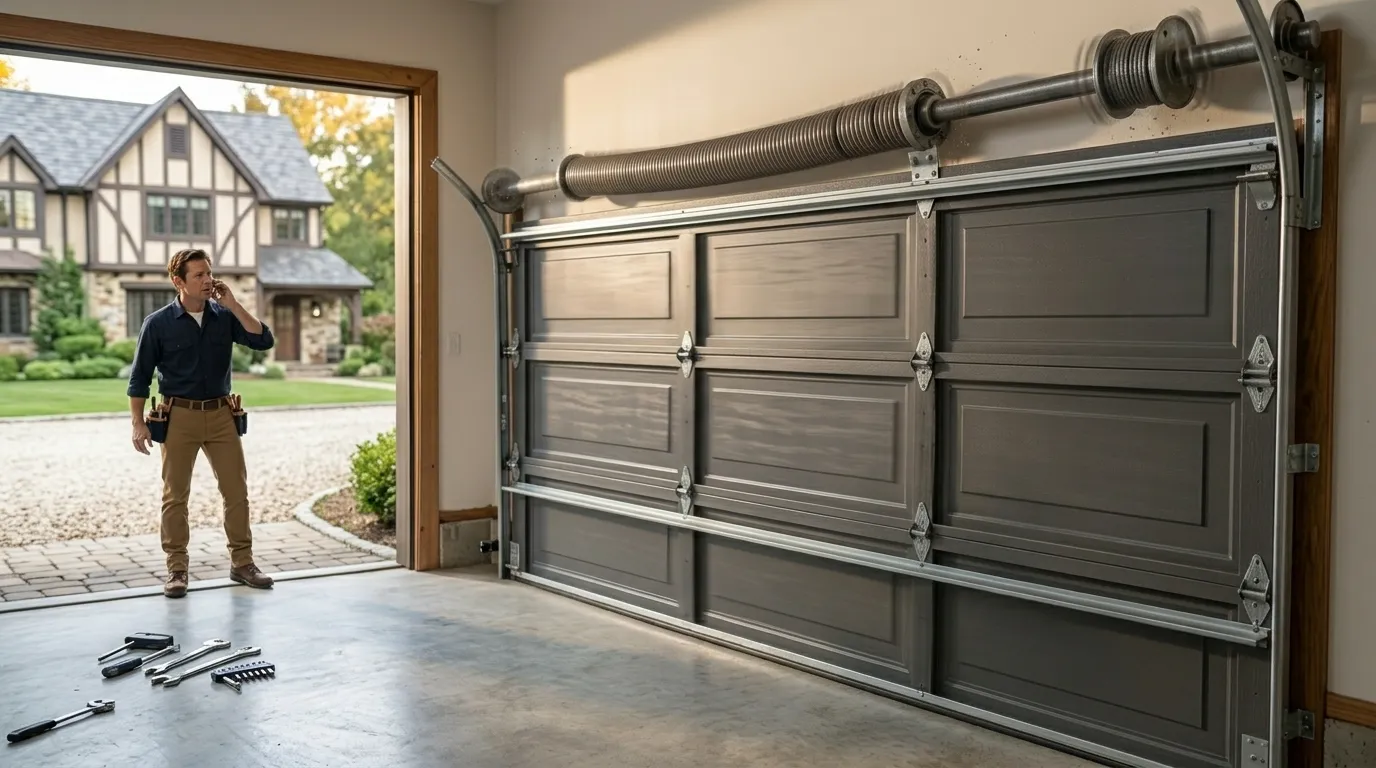
If the door is more than a decade or two off its last spring replacement and it's an original setup from a pre-1960 build, that's not a project for a Saturday afternoon. Same goes for anything involving the torsion bar itself, cable drums, or a door that's come off track - once the door is out of alignment on hardware this old, forcing it back can bend the track or crack an aging panel that was never designed to be pried on. Lubricating hinges and tightening visible bolts is fine to do yourself. Anything with the spring under load isn't.
How we work
What Is Going On
When we get a call, the first thing we're trying to figure out is whether we're looking at a symptom or the actual failure. A door that won't open all the way might be a spring problem, a track problem, or an opener sensor problem, and on a house from the 1950s it's often more than one of those at once because the hardware has aged as a set.
We cover Mansfield and the surrounding towns - Ontario four miles out, Lexington at six, Lucas at seven, and out to Bellville, Shelby, Crestline, Ashland, Galion, Perrysville, Hayesville, Shiloh, Tiro, Jeromesville, Loudonville, Greenwich, and Fredericktown at the far edge of twenty miles. With close to 28,000 households and nearly 14,000 owner-occupied houses across that footprint, most of them built before 1960, the pattern repeats: original torsion hardware, weatherstripping that's cracked from decades of cold, and openers that are a generation or two behind current safety sensors. That's what a call is really diagnosing - not just today's symptom, but how many of those older parts are still in play.
Questions
Common questions
How old does a garage door have to be before repair stops making sense?
There's no single cutoff, but on houses from the 1938-1983 range that dominate this area, once the torsion spring, cables, and rollers are all original and one of them fails, replacing the whole assembly often costs close to what a new door would. We'll tell you which side of that line your door is on before we start.
Why does cold weather cause more spring failures here?
Mansfield sits in a cold-severe climate band, and steel loses some flexibility as it gets cold, which puts more strain on a torsion spring that's already carrying years of wear. That's why the call volume for broken springs tends to jump during the first hard cold snap of the season rather than spreading out evenly through winter.
Do you work outside Mansfield itself?
Yes - we cover the surrounding area including Ontario, Lexington, Lucas, Bellville, Shelby, Crestline, Ashland, Galion, Perrysville, Hayesville, Shiloh, Tiro, Jeromesville, Loudonville, Greenwich, and Fredericktown, out to about twenty miles.
Is it safe to replace a torsion spring myself?
No. A torsion spring holds enough stored tension to cause serious injury, and on older pre-1960 setups the hardware often predates newer safety cable standards, which makes it behave differently than what you'll see in a modern how-to video. This is one job we'd tell you to leave to a call.
Ready when you are
Need a garage door sorted in Mansfield?
Mansfield Garage Door Pros repairs and installs garage doors, springs and openers in Mansfield, OH and the surrounding area.