
One-Piece Doors
One-piece doors with side-mounted spring hardware are common on some of Mansfield's older streets, which changes the repair approach.
Local garage door service · Mansfield, OH
Garage door repair and installation for Mansfield homes built mostly between 1938 and 1983, covering commercial garage doors, off-track repair, panel replacement, roller replacement, spring repair, and the older residential systems common across the area's pre-1960 housing stock.

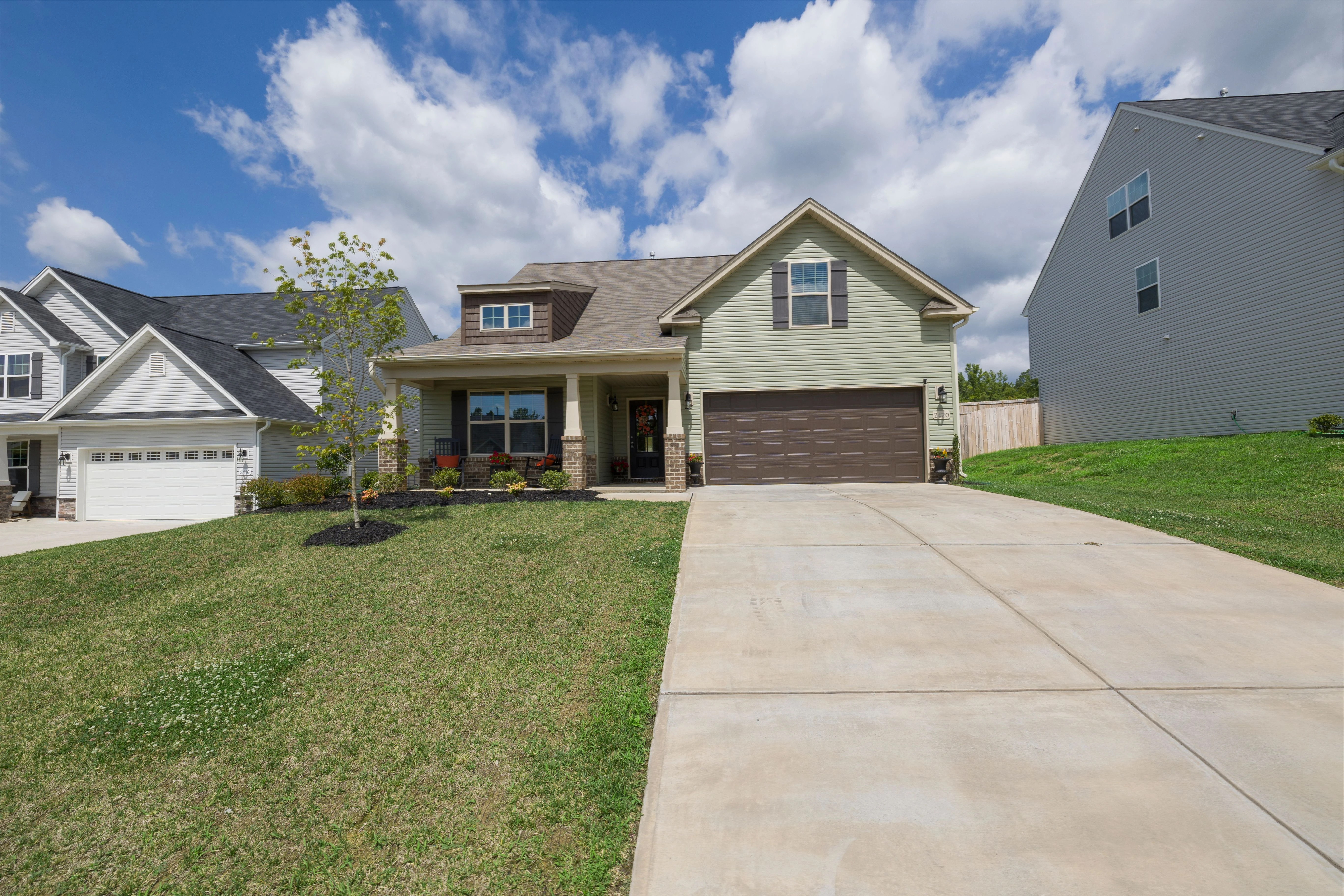
Garage door services
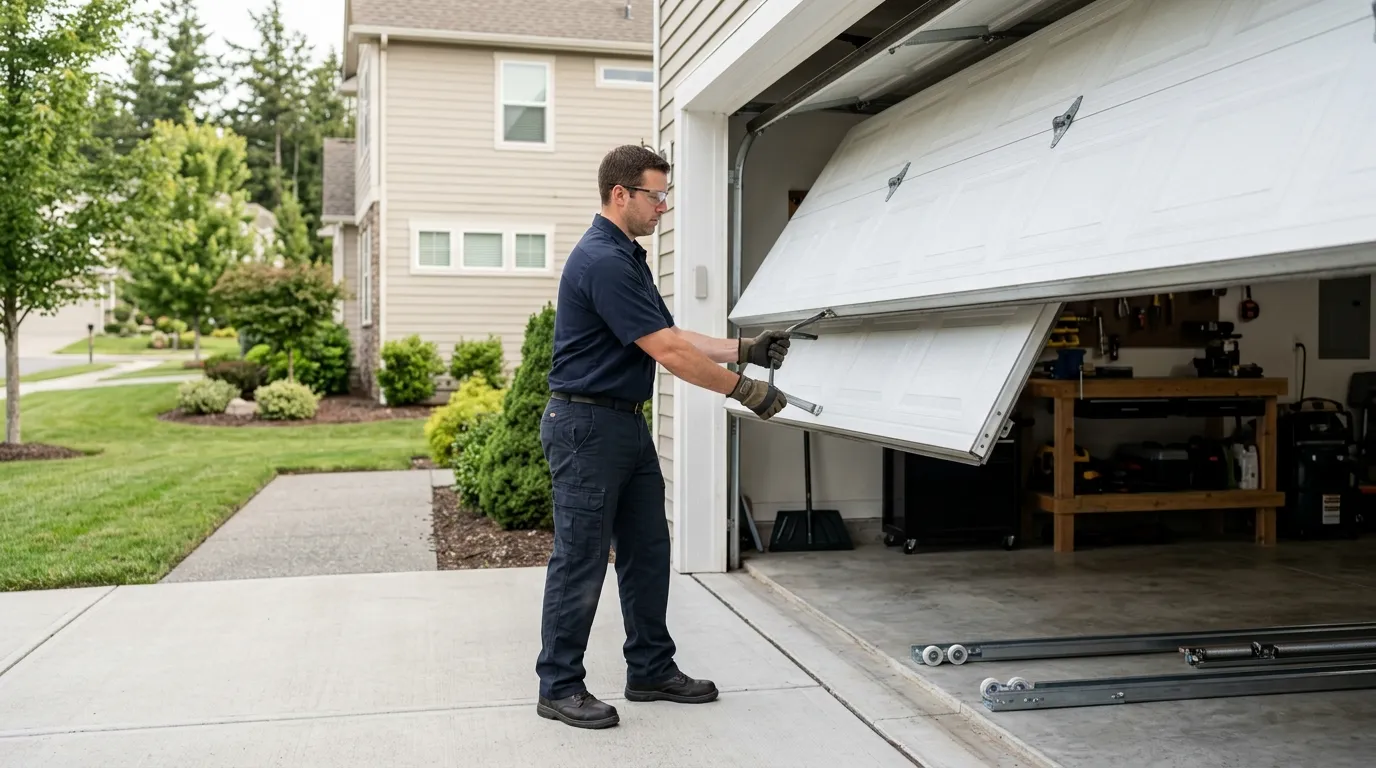
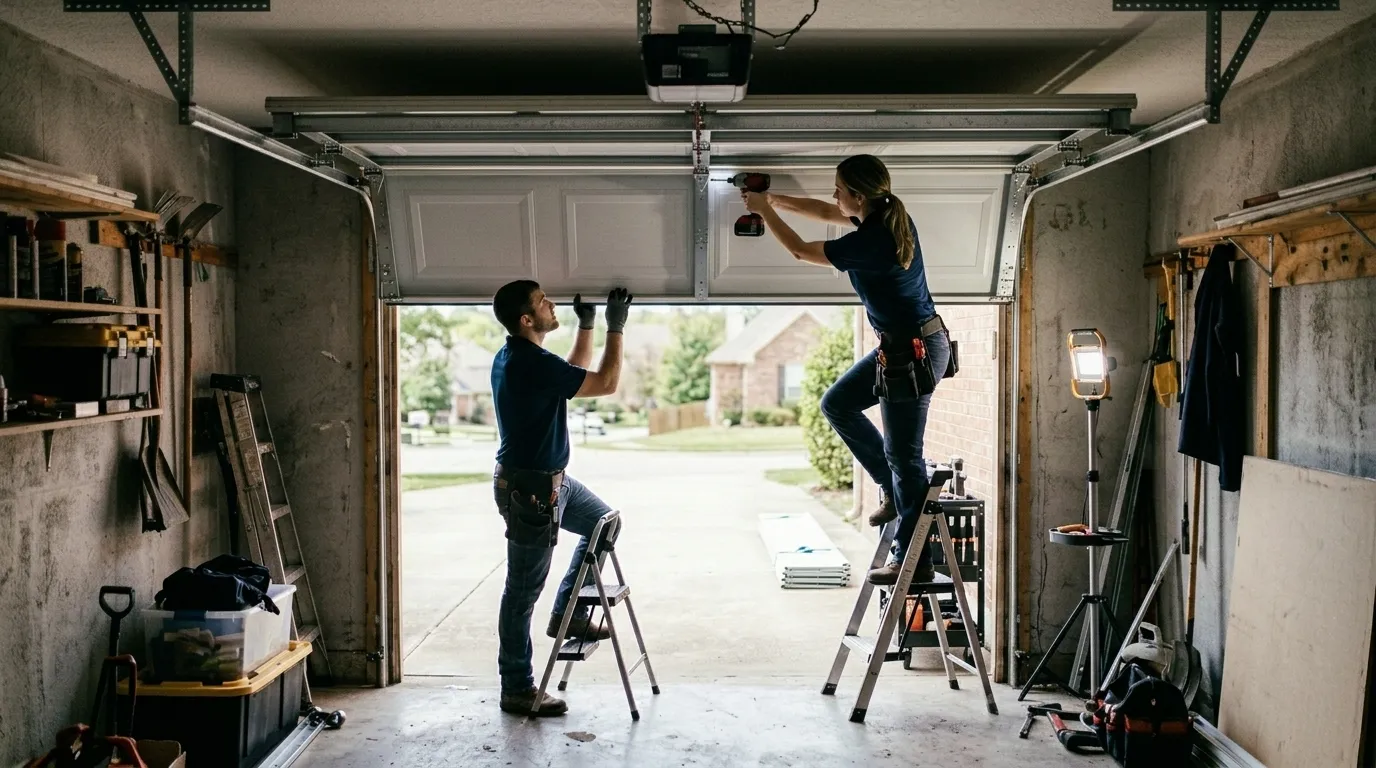
From commercial garage doors and installation to off-track repair, panel replacement, roller replacement, spring repair, and general garage door service, the lineup is built around the systems common across Mansfield's older housing stock.
Local housing matters
The broader source service area is dominated by homes built between 1938 and 1983, with a median build year around 1957.
That creates a large number of garages with older one-piece doors, sectional doors, legacy spring configurations, original tracks, drums, brackets, and replacement openers added later.
There are approximately 27,951 households across the broader Mansfield-area footprint.
Older homes can retain nonstandard spring sizes or track dimensions even when the visible door or opener has already been replaced.
The build year provides useful context, but the correct repair depends on the hardware actually installed today.
Pre-1960 garage door systems
Homes concentrated around the pre-1960 era can combine legacy garage openings, older torsion or extension spring systems, replacement panels, newer openers, and several generations of repair work.
One-piece doors with side-mounted spring hardware are common on some of Mansfield's older streets, which changes the repair approach.
Later homes in the 1938–1983 range can use sectional doors with extension spring systems that need to be matched to the door.
Older track widths, drums, brackets, and mounting hardware may no longer match common modern replacement dimensions.
A garage may have a newer opener or replacement door while still retaining much older tracks, springs, cables, or structural hardware.
Clear repair guidance
There isn't one flat repair price, because Mansfield's older housing includes several generations of garage door hardware.
Spring size, drum configuration, track width, panel condition, opener age, roller wear, and parts availability can all change the repair scope.
Median household income across the broader service area is approximately $58,607.
We inspect the actual installed system and explain what is needed before beginning work rather than quoting a generic number sight unseen.
If a spring, roller set, or other targeted repair solves the problem on an otherwise sound door, full replacement isn't the default.
What to expect
We start with what the door is actually doing, use the home's age and history to anticipate the installed hardware, then inspect the whole system before recommending work.
Tell us whether the door won't open, stops partway, made a loud bang, or the opener runs without moving the door. That symptom is the starting point.
We use the approximate house age, previous repairs, and opener type to help anticipate the hardware that may be installed before we arrive.
Springs, cables, rollers, tracks, opener components, panels, and surrounding hardware are checked before recommending work.
If an older or discontinued component is needed, we explain that rather than guessing at an immediate repair we can't back up.
Some Older Parts May Need Sourcing
Pre-1960 spring, track, drum, or opener hardware can involve dimensions or components that are no longer standard truck stock.
Common Mansfield garage door problems
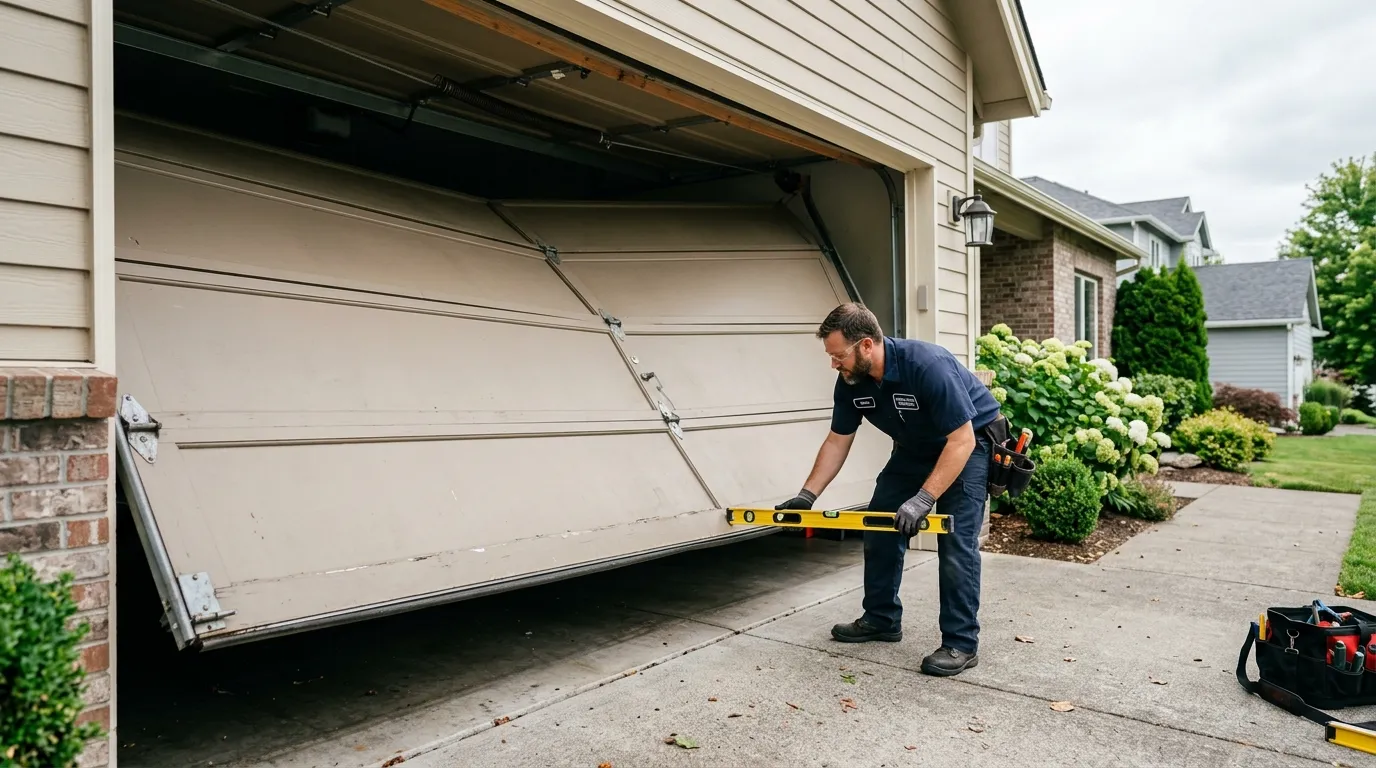
Broken springs, worn rollers, cable problems, bent tracks, opener failures, and panel deterioration make up much of the work across Mansfield's older housing stock. Broken torsion springs are the most common call; worn rollers and bent or deteriorated tracks recur on doors run for decades; cable failures show up especially on older extension-spring systems; and panel damage ranges from dents to corrosion and structural deterioration — so the diagnosis depends on whether the failure is isolated or part of a system deteriorating together.
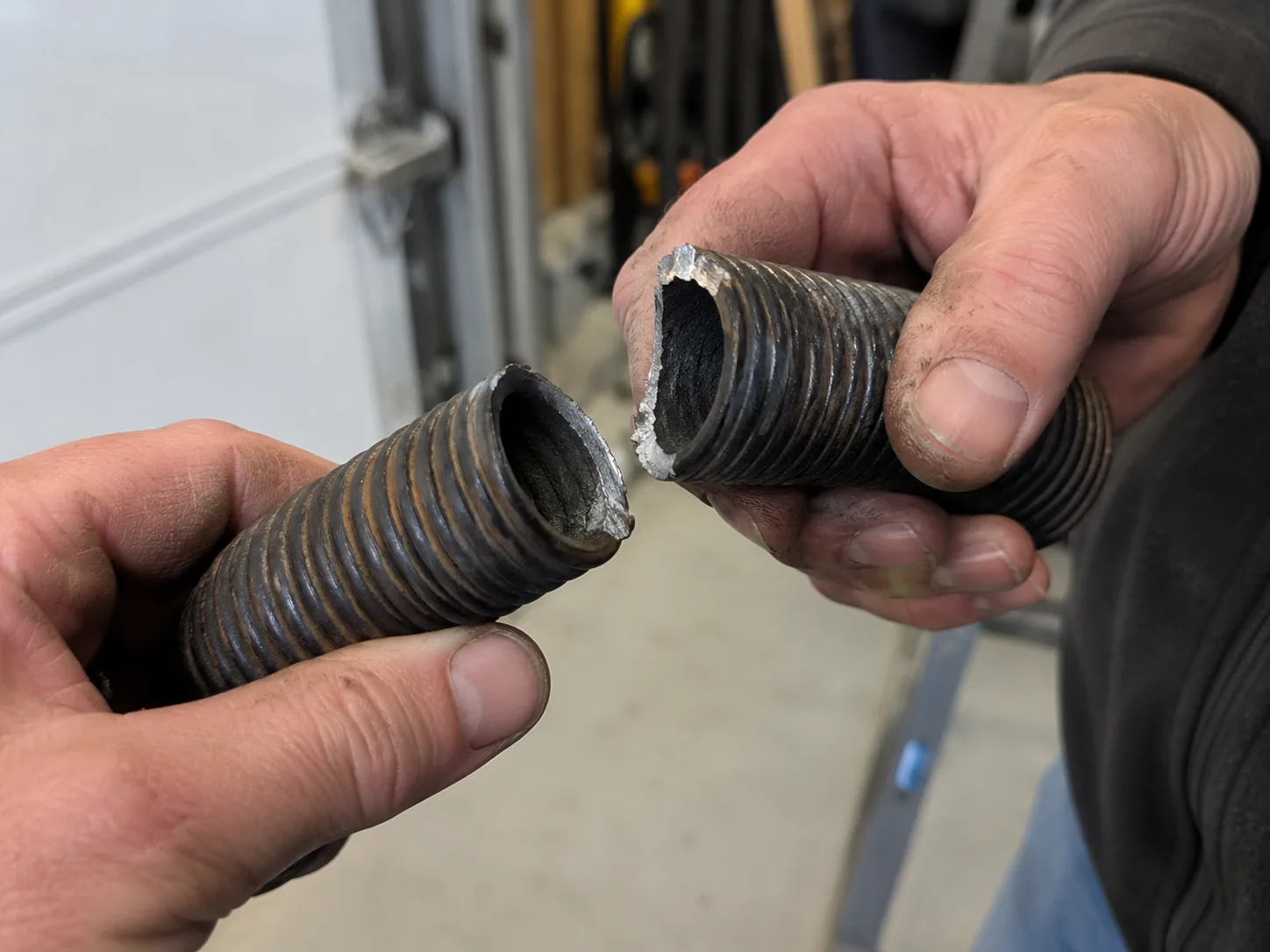
Garage door springs eventually reach the end of their useful cycle life after years of repeated opening and closing, and they're the most common call here.
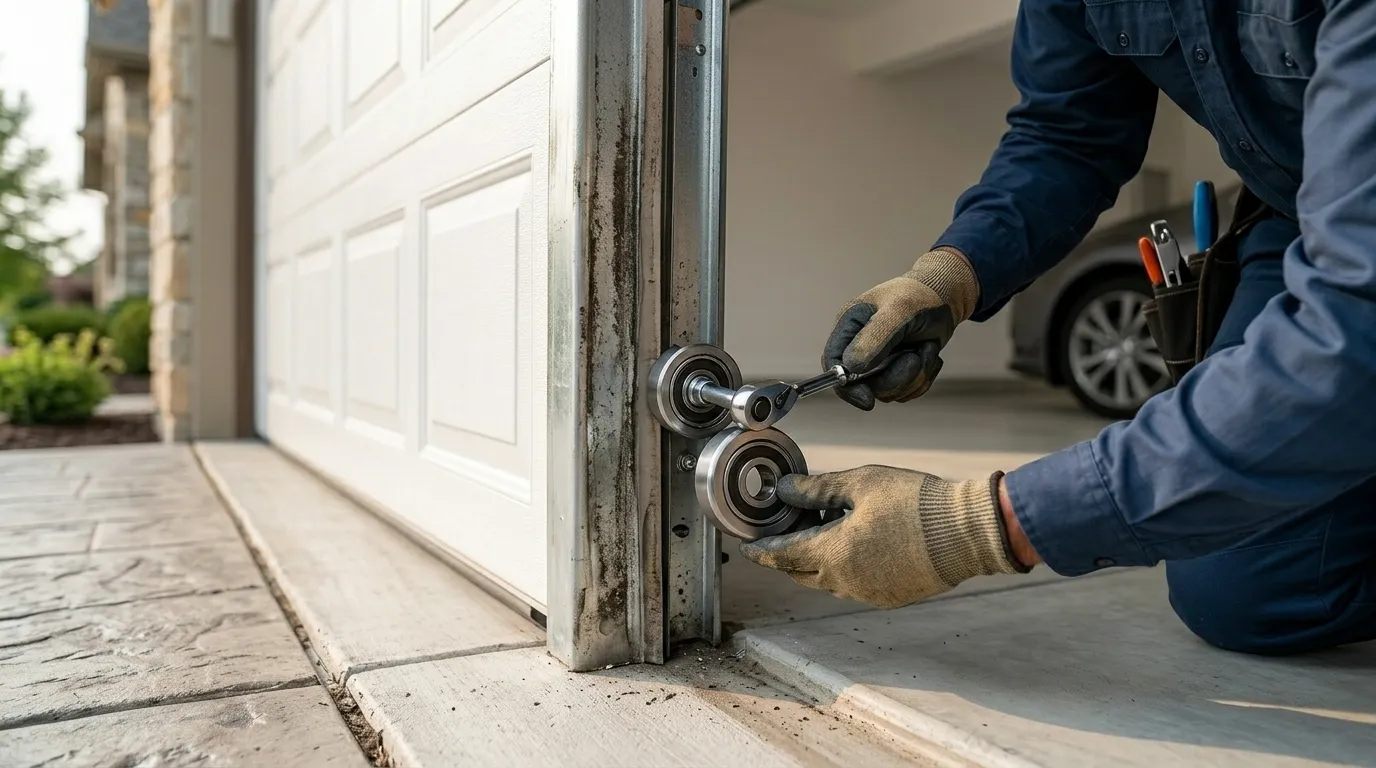
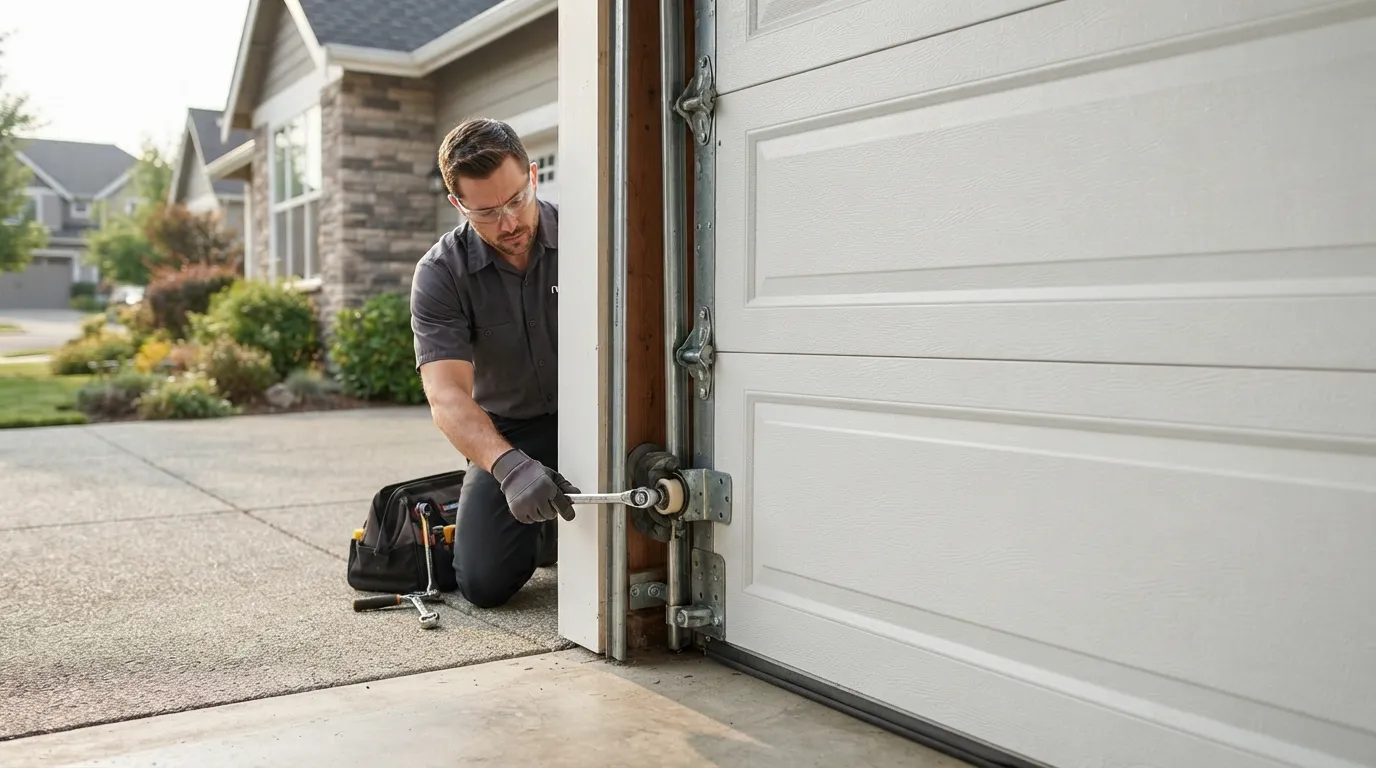
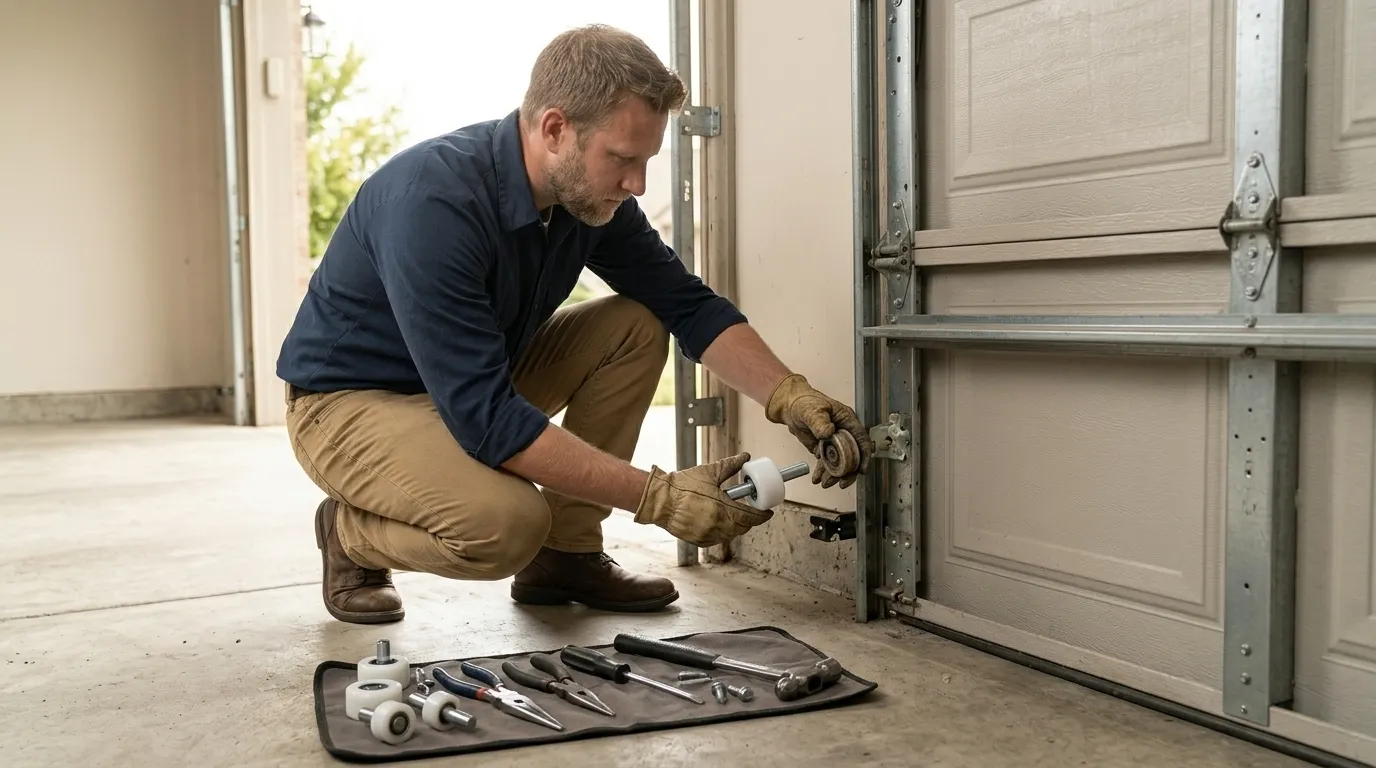
Older rollers can become noisy, rough, seized, or resistant after years of regular track travel, which puts extra strain on the opener.
Corrosion, impact, loosened mounting points, or long-term wear can leave tracks damaged or out of alignment, so the fix addresses the cause.
Cables can fray, loosen, slip, or fail after years of carrying repeated lifting loads, particularly on older extension-spring systems.
Older panels can develop dents, corrosion, warping, or structural deterioration after decades of exposure and use.
Cold-weather garage door wear
Mansfield is in a cold climate with severe winters, and cold weather tends to expose existing spring, roller, track, cable, corrosion, and balance problems rather than causing a failure by temperature alone.
Cold-weather operation can expose weakness in a spring that is already approaching the end of its useful cycle life, which is why springs often let go in a hard freeze.
Worn or corroded rollers can become more noticeable when an older door is already operating with additional winter resistance.
Long-term moisture and winter exposure can contribute to corrosion on tracks, brackets, fasteners, and other steel components.
An opener can work harder when worn springs, rollers, tracks, or balance problems are making the door difficult to move, which shows first in the cold.
Repair or replace?
An old garage door is not automatically a replacement candidate. Repair remains practical when the structure is sound and the failure is isolated, while replacement becomes more sensible when tracks, panels, and several major components are deteriorating together.
A targeted repair can make sense when the panels, tracks, cables, opener, and surrounding structure remain serviceable. One failed part is no reason to replace a sound door.
Replacement becomes more practical when the track itself has deteriorated extensively and repairing one section would only delay another failure.
A new spring or roller set does not solve the underlying problem when the garage door panels themselves are structurally deteriorating.
Broader replacement can make more sense when essential legacy parts are difficult to source and several other components are already near the end of their useful life.
Built around Mansfield garage doors
Mansfield's older housing means two garages on the same street can use different spring, track, drum, cable, roller, panel, and opener configurations depending on when each system was installed or updated.
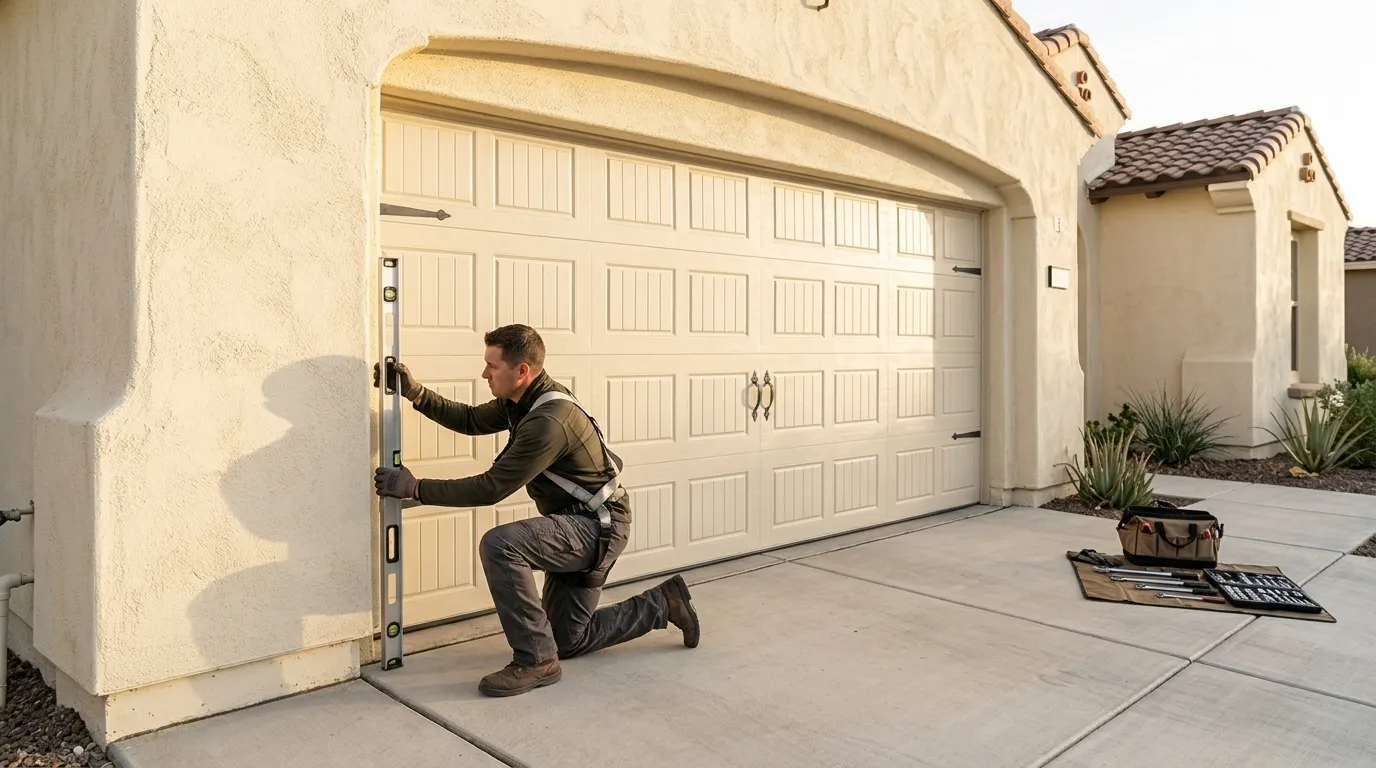
Older spring and track dimensions should be measured directly rather than assumed from current residential standards.
A failed spring or roller can be part of a larger pattern of wear across an older lifting and track system, so more than the symptom gets checked.
If one component is the true failure and the structure remains sound, complete replacement isn't the default recommendation.
If older or discontinued hardware requires sourcing, the repair timeline should reflect actual availability rather than an optimistic guess.
Questions
A lot of what we see traces back to houses built between 1938 and 1983, with the median around 1957. That means original torsion or extension spring setups that have been running for decades, often on tracks and drums that aren't standard sizes anymore. It shapes what parts we carry and how we diagnose a call before we even arrive.
We cover the surrounding area, including towns like Ontario, Lexington, Lucas, and Bellville within about ten miles, and further out toward Shelby, Crestline, Ashland, and Galion. Housing stock across this whole radius runs pre-1960 in large part, so the work looks similar from one town to the next.
This area sits in a cold climate with severe winters, and that's hard on steel - springs lose tension faster, rollers seize, and track can warp with repeated freeze-thaw cycles. If your door has been getting harder to lift as it's gotten colder, that's usually the spring, not the opener.
Yes. If the track has rusted through or the panels are failing structurally on a decades-old door, a repair just buys a few months before the next breakdown. We'll tell you when replacement makes more sense than another patch, rather than billing for a fix that won't hold.
Ready when you are
Tell us what the door is doing and we'll help you figure out whether you're dealing with a spring, roller, panel, track, off-track door, aging hardware, or a system that's reached the point where replacement makes more sense.