
Track misfit grinding
That's the roller working against a track section it no longer fits cleanly. Some homeowners describe the door as jerking or hesitating at that same spot, or the door sounding like it's dragging something across concrete.
Mansfield, OH
Worn or broken rollers on Mansfield's pre-1960 garage doors, explained: why they fail here, what we stock, and how the fix goes on original hardware.

Our process
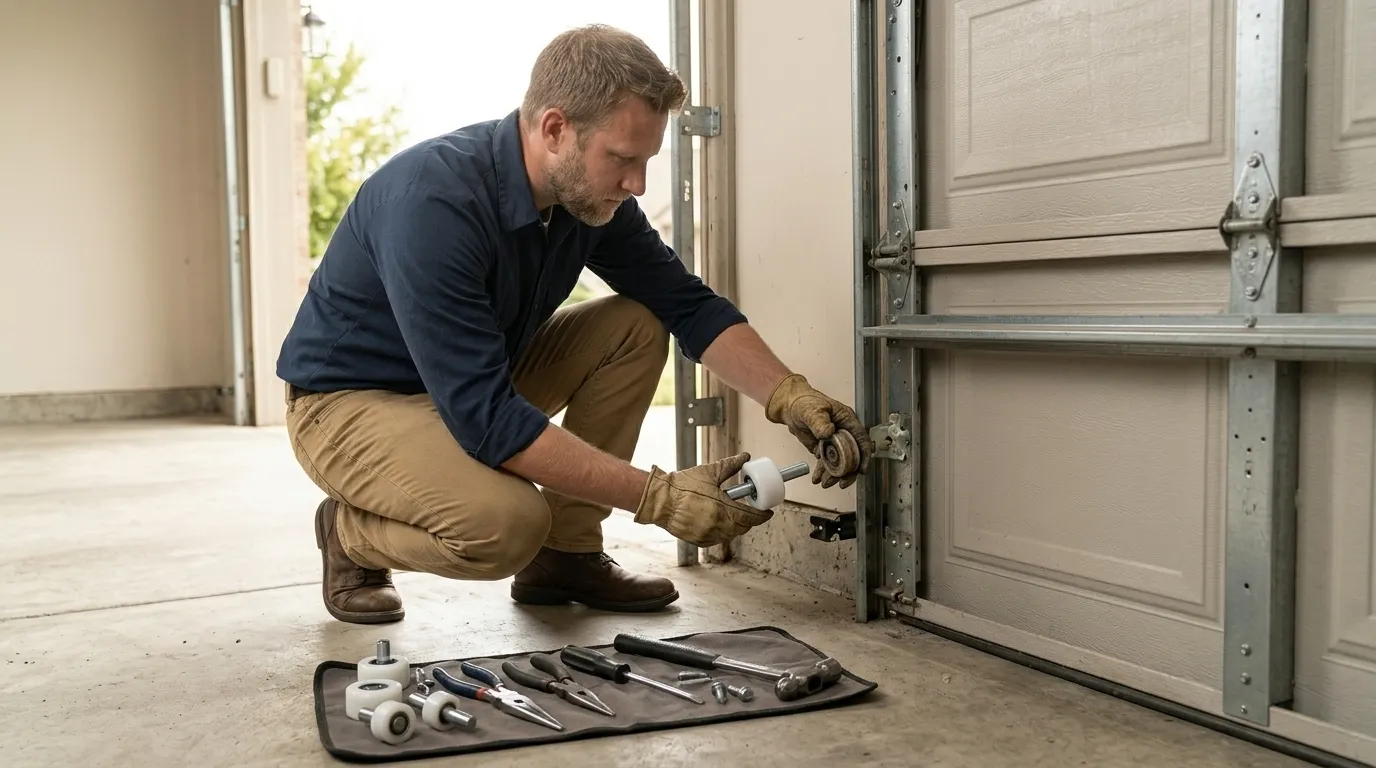
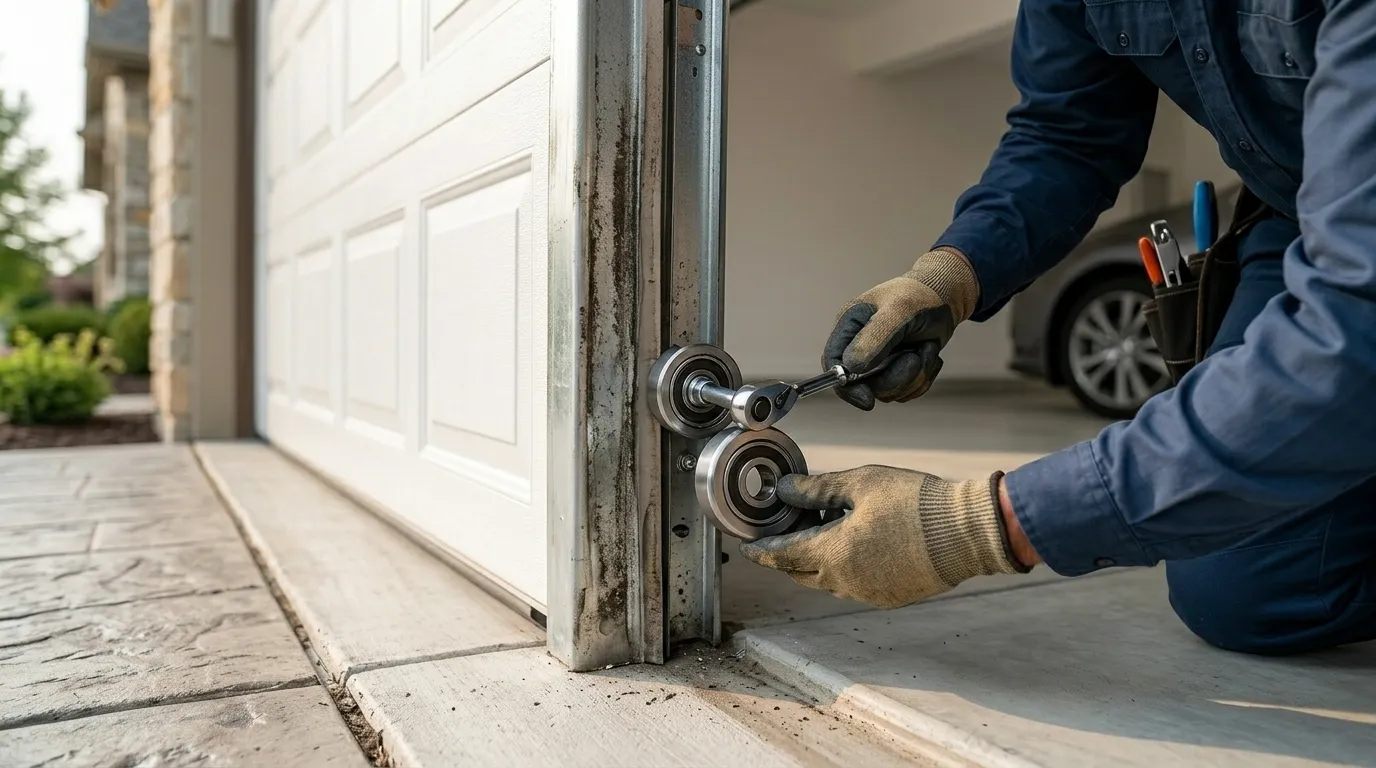
We start by running the door by hand with the opener disconnected, watching the roller stems where they ride the track. A worn roller shows up as a grinding or popping noise right at the bend where the track curves from vertical to horizontal - that's the spot carrying the most side load.
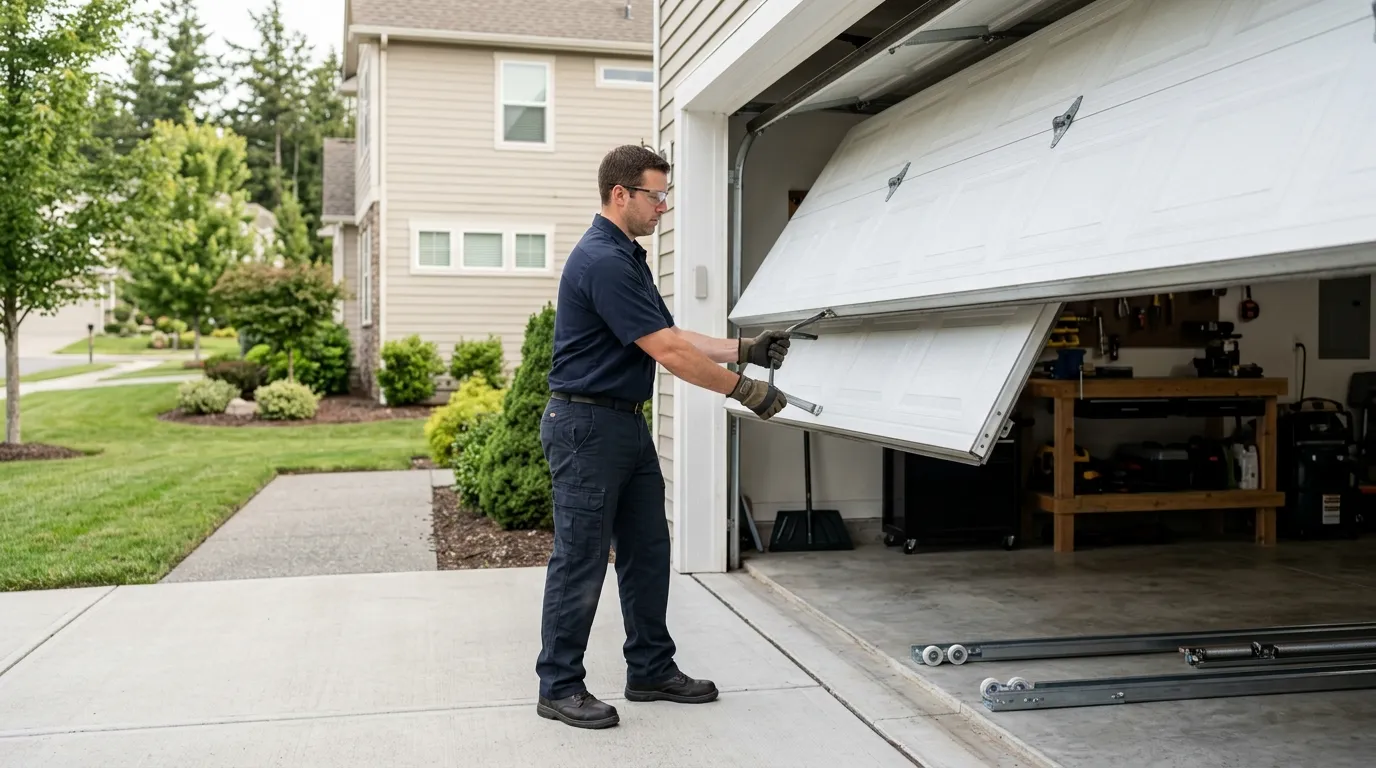
If the stem is bent or the roller wheel is cracked, we pull the section, support the door, and swap the roller out one at a time so the panel never comes off its track.
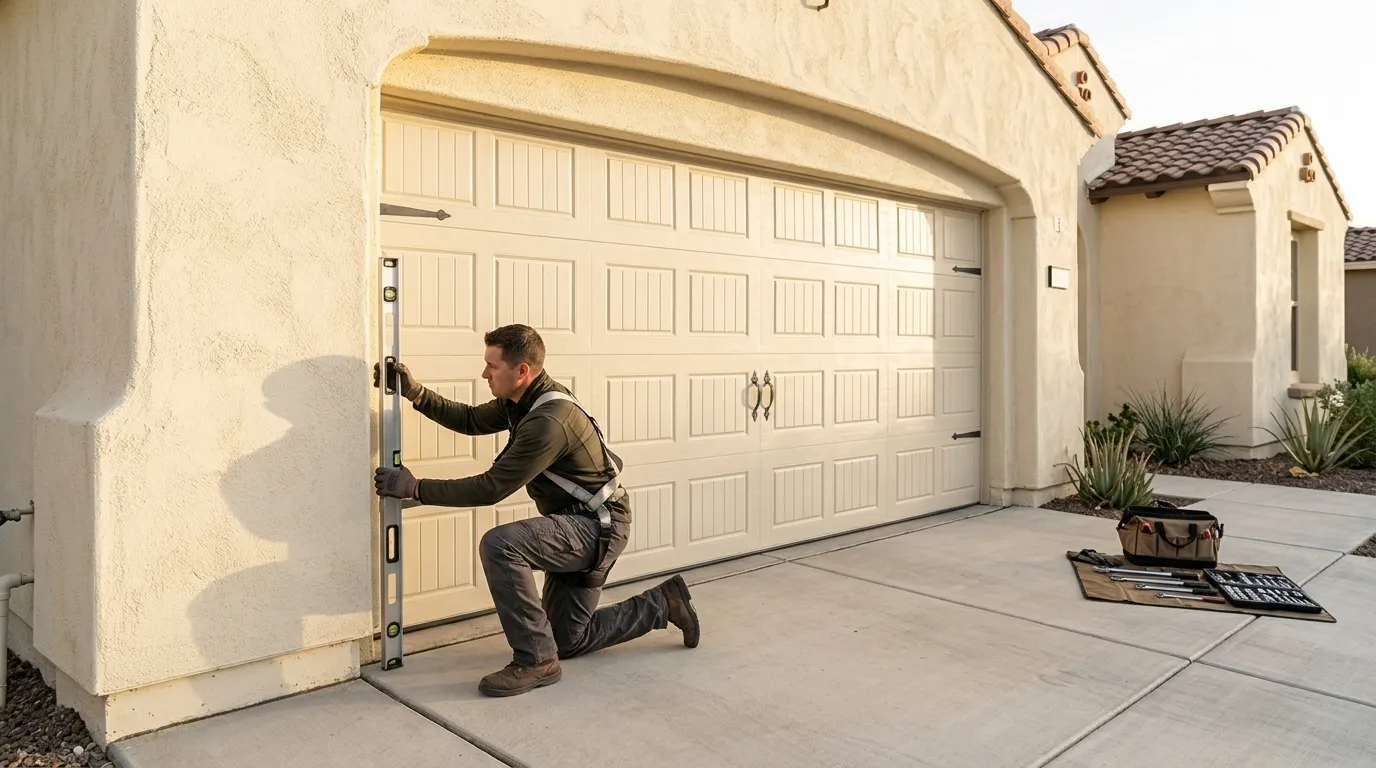
On doors with steel rollers, we check the track alignment at the same time, because a roller rarely fails on its own - a track that's crept out of true will chew through a new roller just as fast as the old one. Nylon rollers with sealed bearings go in on most jobs unless the homeowner wants to stay with steel.
Either way we test the door through a dozen full cycles before we call it done, listening for the noise to be gone, not just quieter. If the track itself is bent or rusted through, roller replacement alone won't hold, and we say so before starting rather than after.
Local causes
Housing across the Mansfield service area was mostly built between 1938 and 1983, with a median build year of 1957, and most of the 16 communities we cover carry that same pre-1960 stock. Garage doors on houses from that era were built for steel rollers riding steel track, with none of the sealed-bearing hardware that shipped standard starting decades later. That older steel-on-steel setup depends on grease staying put and metal staying round - two things a severe cold climate works against every winter. Cold makes the door's lift springs stiffer and the whole assembly heavier to move at start-up, and that extra strain lands on the rollers first because they're the only moving part in constant contact with the track. On a house built in the 1950s that's never had the rollers touched, decades of that cycle wear a groove into the roller wheel itself. We see it as a seasonal pattern: the noise starts in fall, gets worse through the coldest months, and by the time a homeowner calls, the roller has usually gone from noisy to actually failing.
Symptoms
The complaint we hear most is a grinding, rattling, or popping sound every time the door opens or closes, usually loudest at one specific point in the travel rather than the whole way through.
That's the roller working against a track section it no longer fits cleanly. Some homeowners describe the door as jerking or hesitating at that same spot, or the door sounding like it's dragging something across concrete.
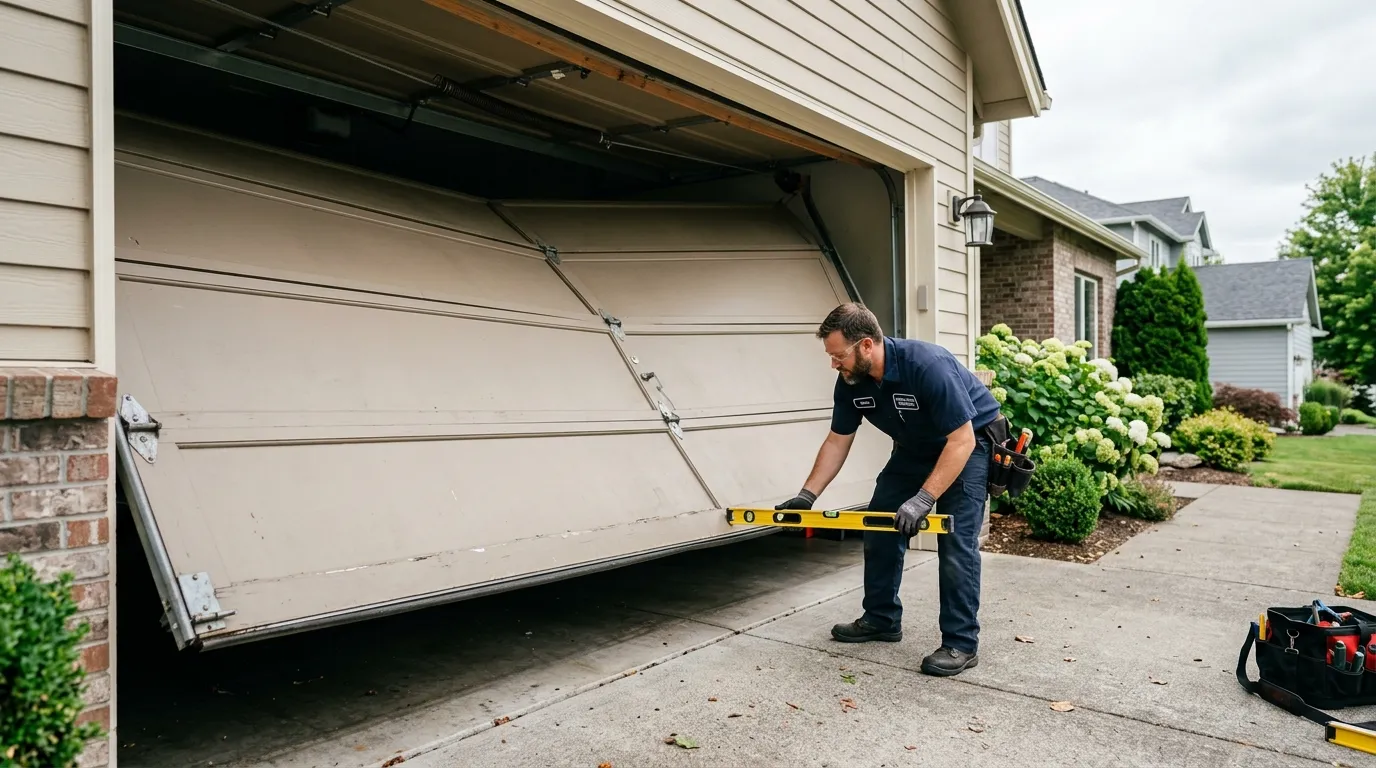
If a roller wheel has cracked or split, you might see small chips of nylon or a spray of rust flakes on the floor under the track. Left alone, a failing roller puts more side load on the track brackets, and eventually a stem can shear off mid-cycle, which drops that corner of the door onto the track with no support.
That's the point where a $20-30 part problem turns into a bent track and a much bigger job. Catching the grinding noise early, before the door starts binding or refusing to move smoothly, is what keeps this a roller job instead of a track-and-roller job.

On the truck
We carry nylon rollers with sealed ball bearings in the stem sizes that fit the steel track common on the older doors across this area, plus a run of steel rollers for homeowners who want to match original hardware rather than upgrade. What we don't stock on the truck is oddball roller stem lengths from a handful of older custom or commercial doors - those get ordered, and we'll tell you that up front rather than have you wait on-site for a part that isn't coming that day. For a straightforward roller swap on a residential door, most jobs finish in one visit. Given how many houses in this service area still run original steel track from a 1950s or 1960s build, having the common roller sizes on hand rather than special-ordering them is the difference between a same-visit fix and a second appointment.
Questions
If one roller has failed, we check all of them, because they wear at roughly the same rate on a door that's never had them serviced. On an older door with original steel rollers, it's common to replace the full set rather than just the one that's loudest, so the door doesn't come back for the next roller in a few months.
Only if the track and hinges are still straight. Rollers take the blame for noise that sometimes comes from a bent track, loose hinge, or dry hardware. We check the whole run before replacing rollers so you're not paying for a part that won't solve the actual noise.
Usually yes. Rollers are inexpensive compared to the track or the door section itself, and swapping to sealed nylon rollers on an original steel track is a common upgrade we do without touching anything else on the door.
Cold stiffens the spring tension and thickens old grease, so the door works harder every cycle through winter. On steel rollers that are already worn, that added strain is often what pushes a slow grind into a cracked wheel or bent stem.
Explore more
Ready when you are
Mansfield Garage Door Pros repairs and installs garage doors, springs and openers in Mansfield, OH and the surrounding area.