
Bottom Corner Warp Gap
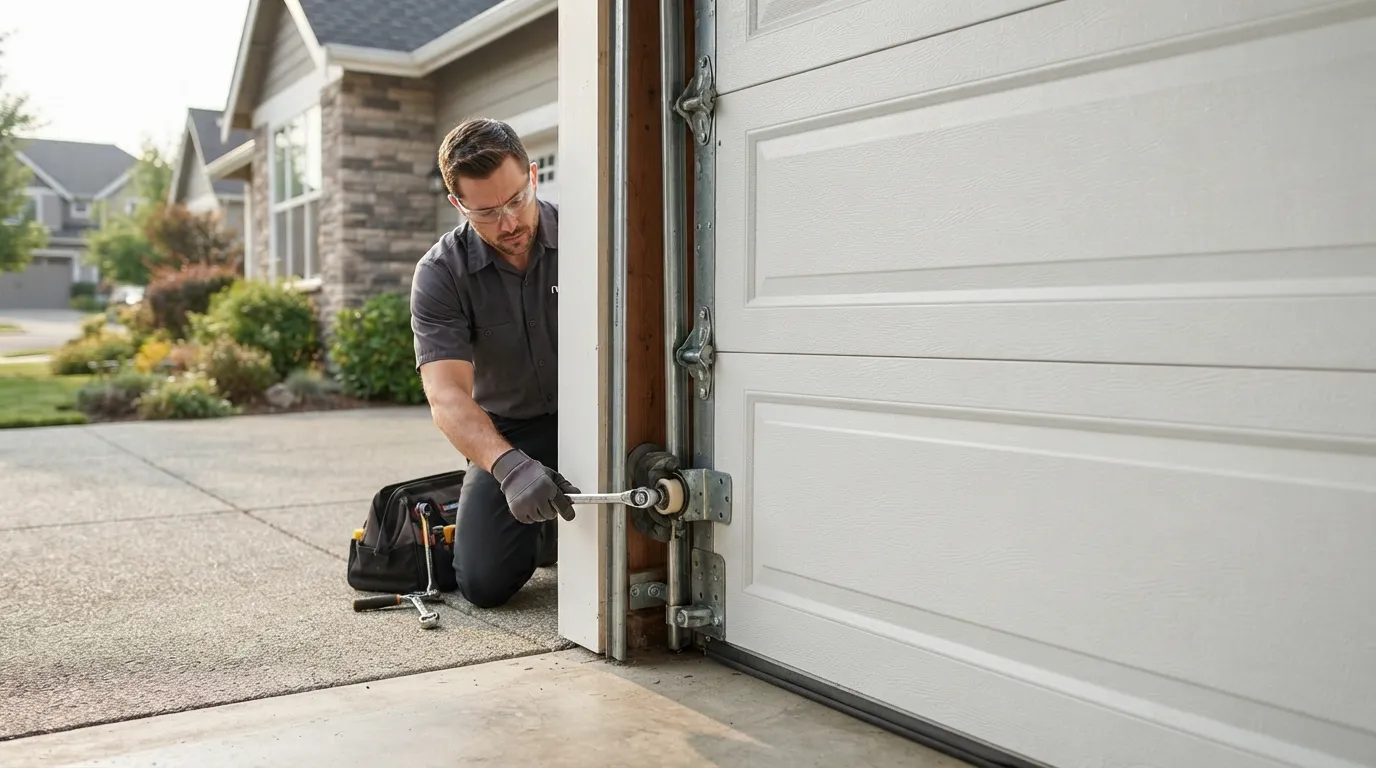
On the older one-piece and early sectional doors common in this area's pre-1960 stock, you'll also see gaps at the bottom corners that no amount of weatherstripping fixes, because the panel itself has warped.
Mansfield, OH
New garage door installation in Mansfield, OH, built around a housing stock that runs mostly 1938-1983 and a climate that punishes old, uninsulated doors.
Our process
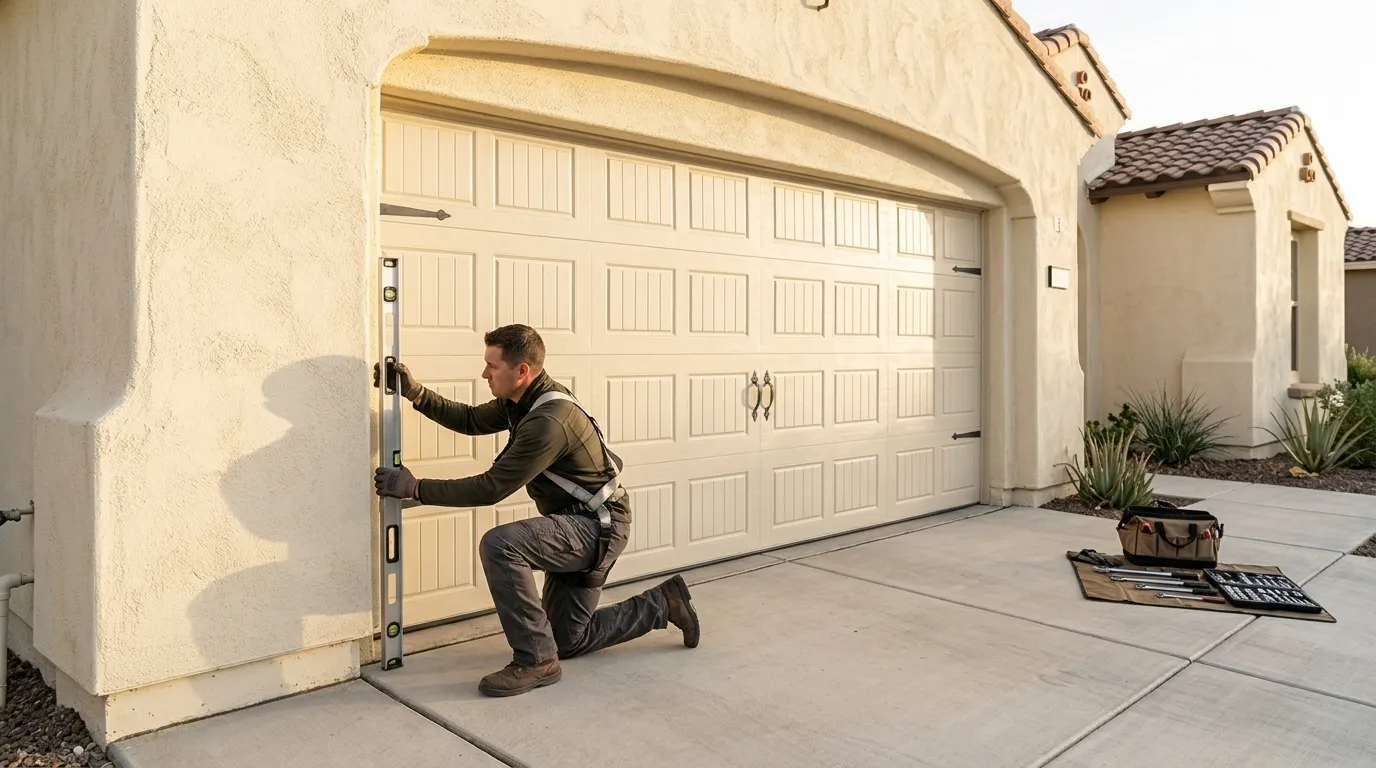
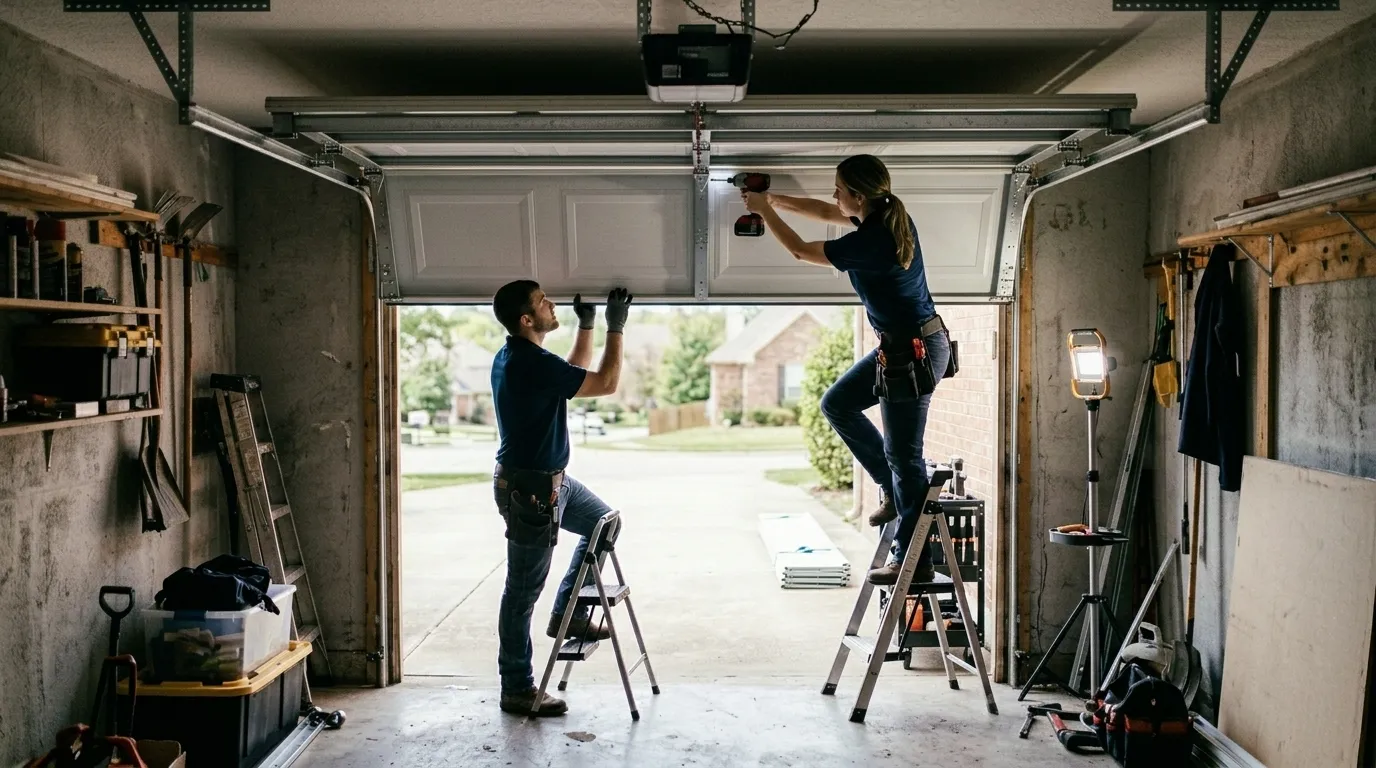
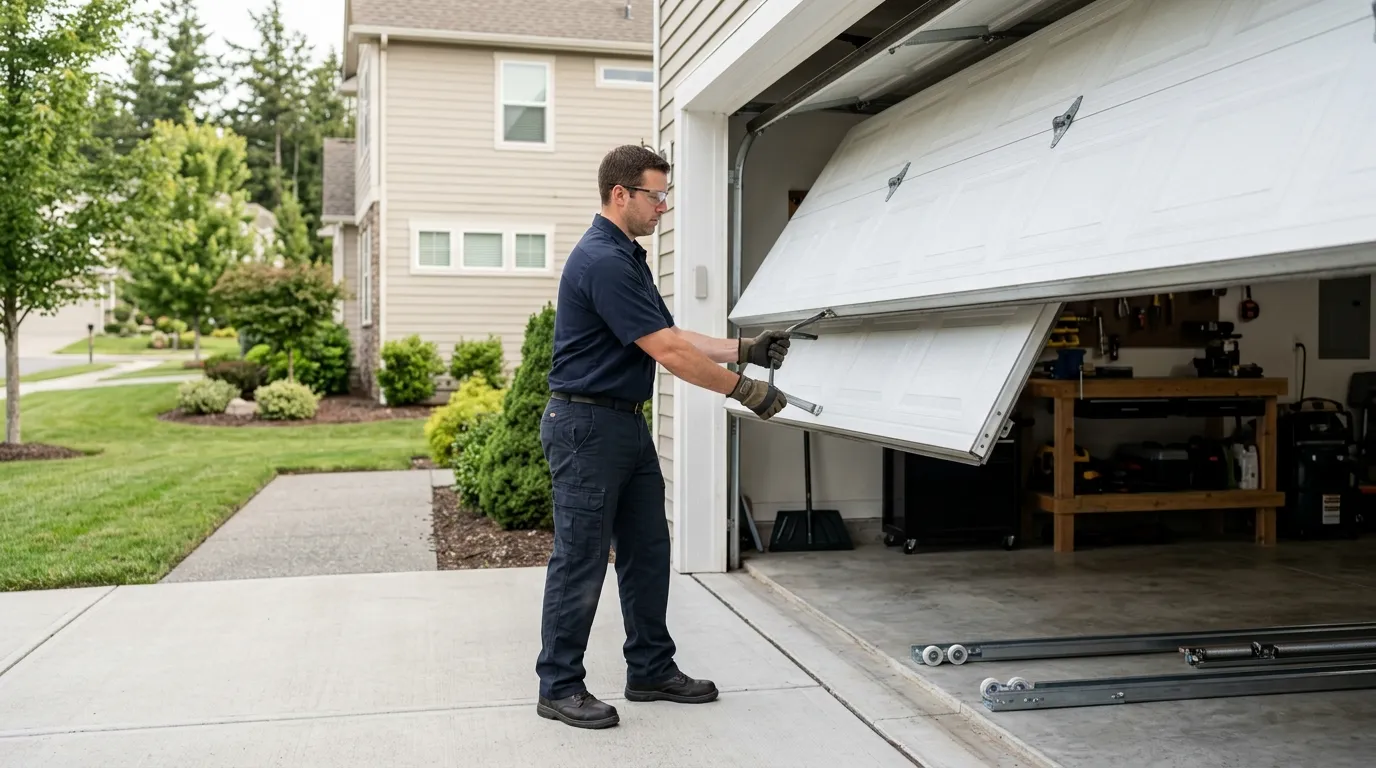
When we install a new door in Mansfield, the first job is measuring the opening, not the door. Homes here were mostly built between 1938 and 1983, and openings from that era rarely match today's standard sizes exactly - framing settles, old jambs are out of square, and some openings were cut for one-piece doors that don't exist as a product line anymore. We pull the old door and track, check the header for rot or shift, and re-square the frame before anything new goes in. On a double-wide opening we set new vertical tracks and torsion hardware rated for our climate band rather than a generic residential kit, because the loads on a door in a cold-severe zone are different from a door installed somewhere mild. Once the door is set, we balance the springs to the door's actual weight, not a factory average, and test the opener's force settings so the door doesn't slam on cold mornings when steel contracts. We don't shim old rotted jambs and call it done - if the framing's gone, that gets called out before install, not after.
Local causes
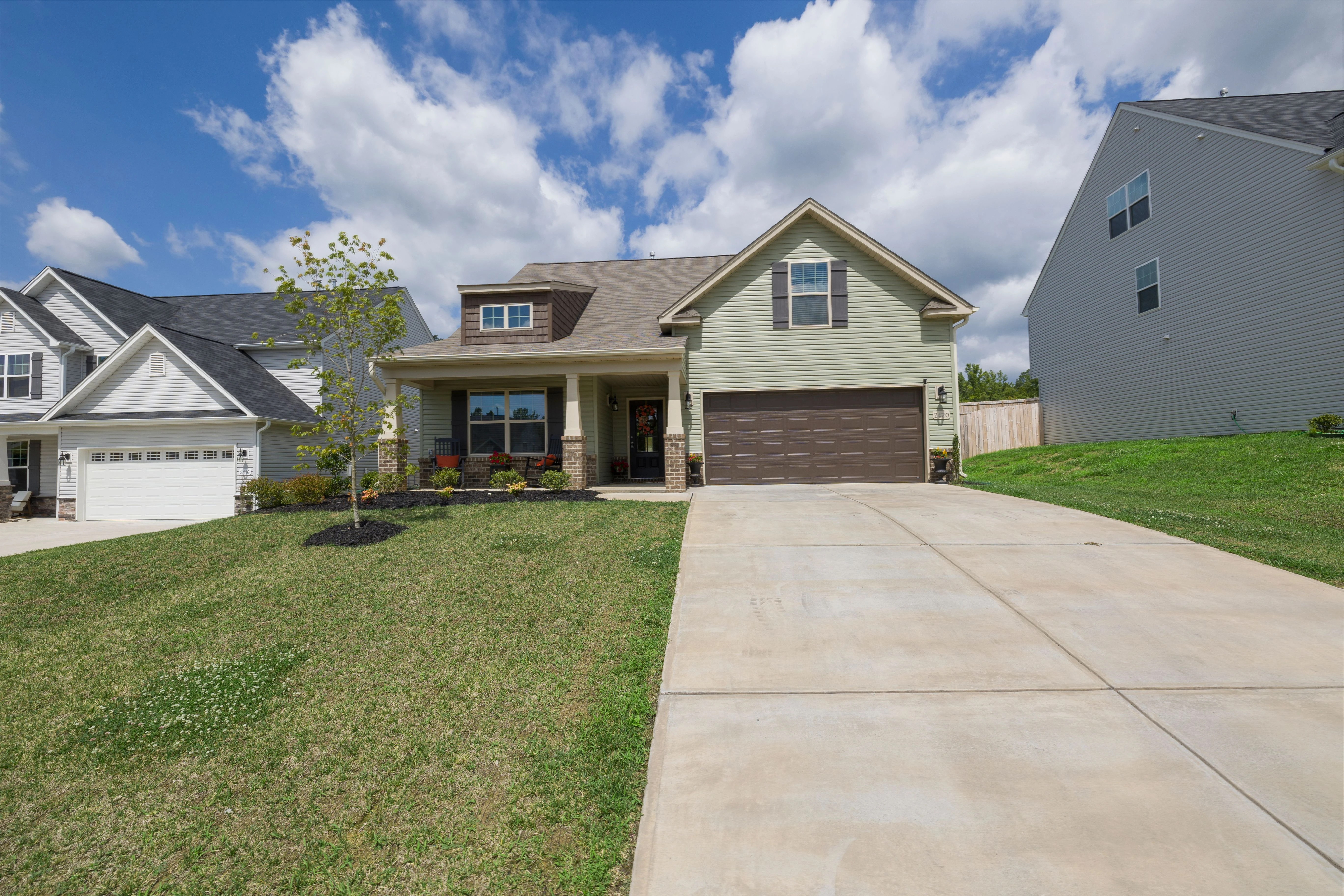
Mansfield's housing stock centers on a median build year of 1957, and across the sixteen named areas we serve, most of the stock is pre-1960. That matters for installation because doors and openings from that period were built to a much lighter standard than current code assumes: thinner panels, no insulation core, hardware sized for a shorter service life than modern torsion systems. Combine that with a cold-severe climate band and you get openings and framing that have spent six to eight decades cycling through freeze-thaw stress every winter. Old jambs shrink, headers sag a fraction of an inch, and a door that was plumb in 1957 often isn't plumb now. That's why so many installation calls in Mansfield aren't simple swaps - they're a new door meeting an opening that's moved. We size and shim for that reality instead of assuming a modern, square opening like you'd find in newer construction elsewhere.
Symptoms
The clearest sign you need a new install rather than another repair: the door still runs, but it's noticeably heavier to lift by hand than it should be, the panels have visible bow or rust-through near the bottom, and the opener strains or reverses on cold mornings.
On the older one-piece and early sectional doors common in this area's pre-1960 stock, you'll also see gaps at the bottom corners that no amount of weatherstripping fixes, because the panel itself has warped.
If your door was installed with hardware original to a house built before 1960, and it's fighting you every time the temperature drops, that's not a spring adjustment - that's a door and track system that's outlived its design life. We'll tell you plainly when a repair is throwing good money at a door that's done, rather than stringing along another service call.
On the truck
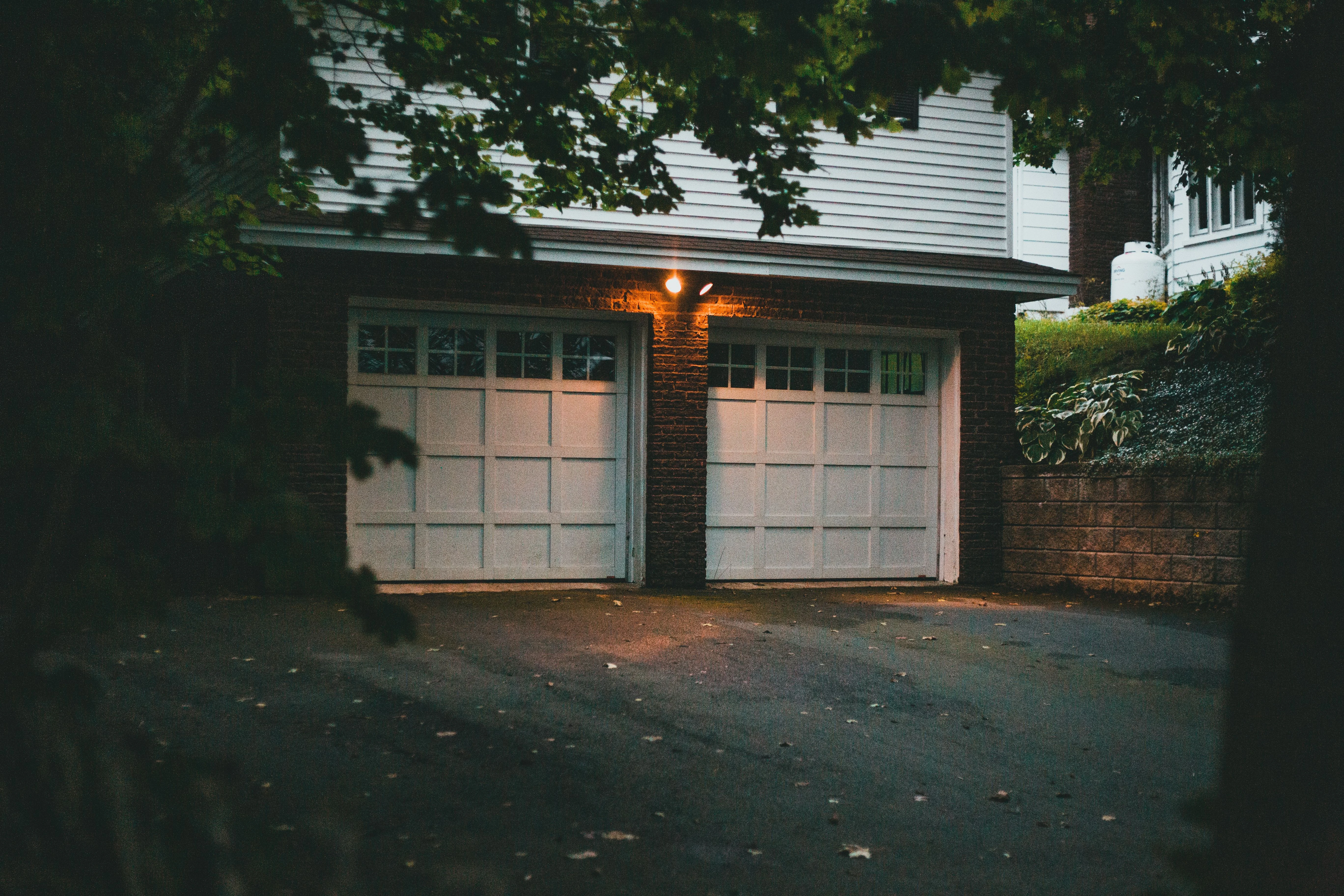
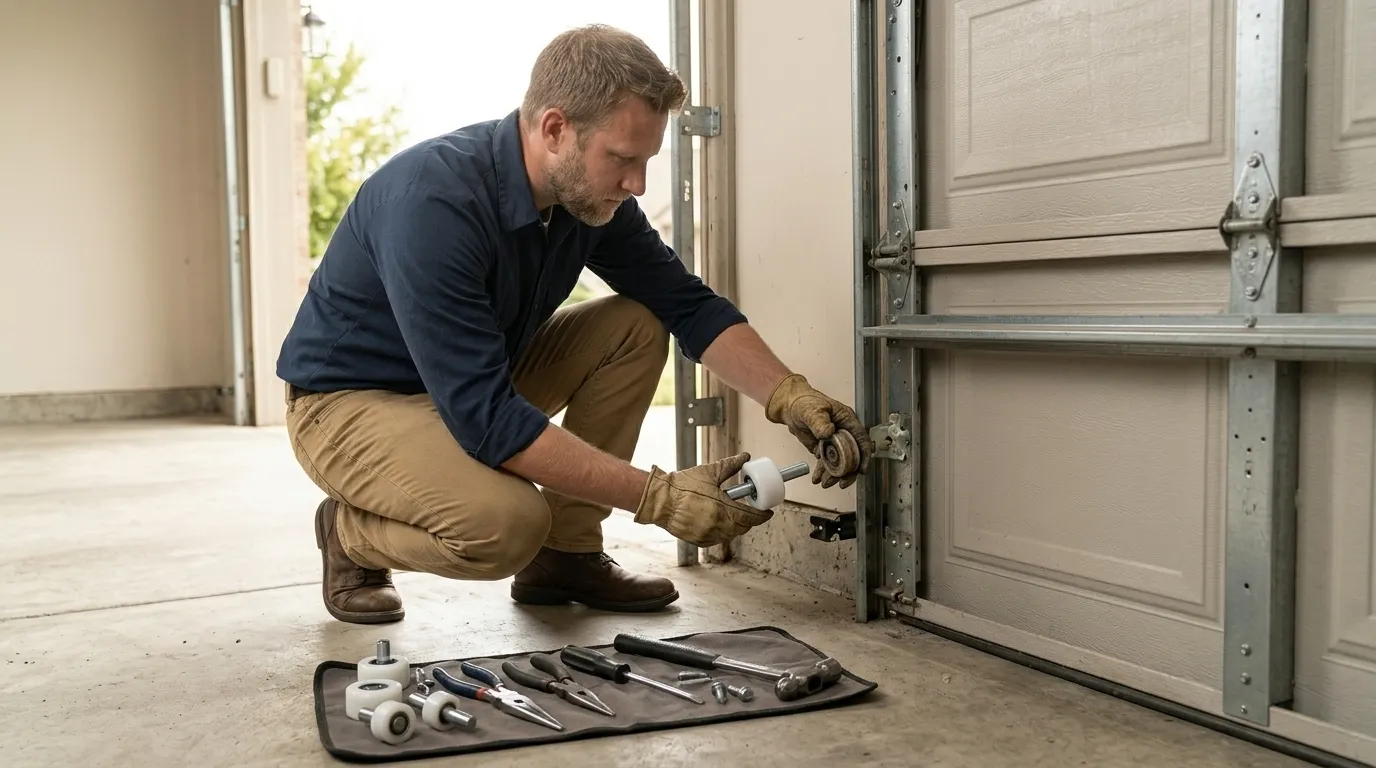
We keep torsion springs, standard-width track sections, and insulated steel panels sized for the openings most common in Mansfield's 1938-1983 housing on the truck, since those are the sizes we install most weeks. What we don't stock: odd, non-standard widths from some of the oldest pre-1940 openings, or discontinued panel profiles that a handful of original one-piece doors in this area still use. Those get special-ordered, and that's the honest limitation here - if your opening is one of the outliers, expect a short lead time on the door itself rather than a same-week install. Springs and hardware rated for our climate band we keep on hand year-round, because cold-weather callouts here don't wait for a supplier.
Questions
If the door and hardware are original to a house built before 1960 - common across this area - and you're seeing panel warp or the opener straining in cold weather, you're usually past the point where repair buys you much time. We'll look at the specific door before recommending replacement over another fix.
Sometimes, but not always. Framing in homes built in the 1938-1983 range has often shifted out of square over the decades. We check the header and jambs before quoting, and if the frame needs correction, that's part of the estimate, not a surprise add-on later.
Yes. We size torsion hardware and select panel insulation based on our cold-severe climate band, not a generic national average. That affects spring load calculations and how the opener's force settings get tuned so the door doesn't bind or slam in winter.
Standard widths matching the housing common to this area are stocked and can go in fast. Non-standard or older openings sometimes require a special-order panel, which adds lead time - we'll tell you upfront if your opening falls into that category.
Explore more
Ready when you are
Mansfield Garage Door Pros repairs and installs garage doors, springs and openers in Mansfield, OH and the surrounding area.